Steam cleaning vs dry carpet cleaning: which one do you need?
One method rinses the carpet and takes the dirty water away. The other tidies the surface and lets you walk on it sooner. Both have a place, and they are not the same place.
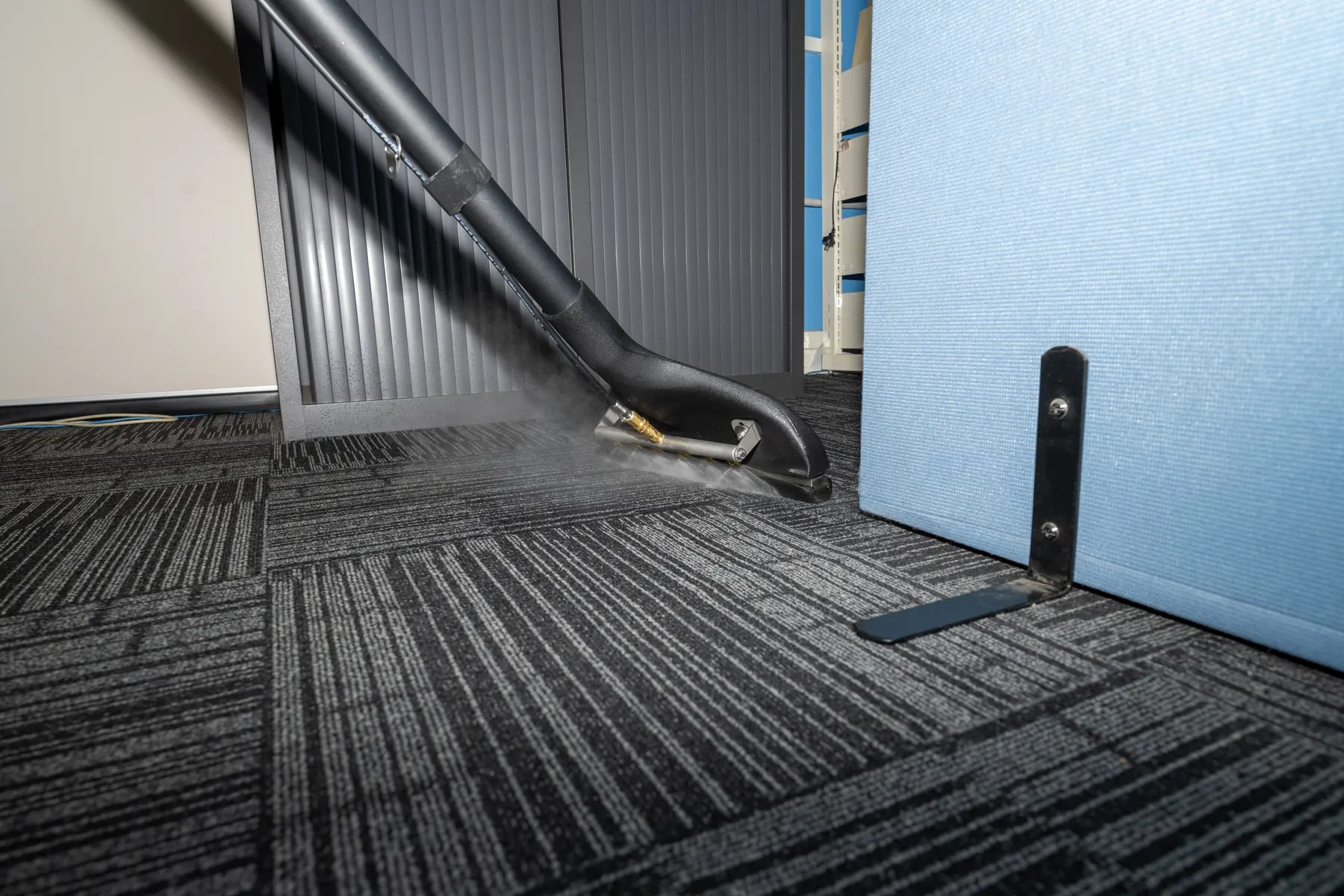
Hot water extraction, usually called steam cleaning, sprays hot solution into the carpet and vacuums it back out, so soil leaves with the water. Dry and low-moisture methods use powder or a little liquid and dry far sooner, but clean mainly the upper pile. Extraction suits dirty carpet. Low-moisture suits upkeep.
What does each method physically do?
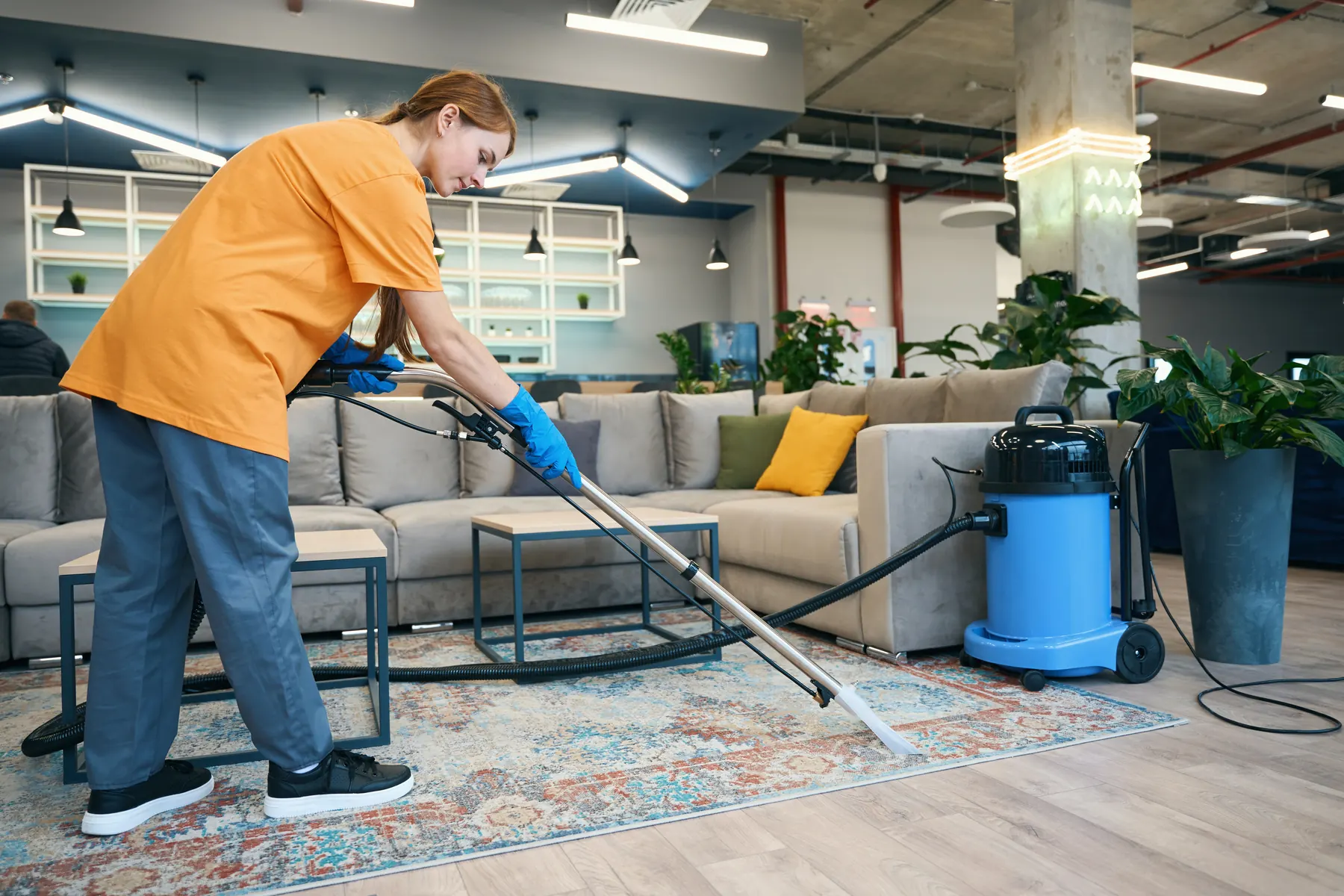
Hot water extraction. A pre-spray goes on first to loosen soil and is worked into the pile. Then a wand sprays hot water into the carpet and recovers it in the same stroke, through a vacuum slot just behind the jets. The dirty water goes to a tank. Nothing in this is steam. The vapour is hot water meeting cool air, and the name has stuck anyway.
Dry compound. A slightly damp absorbent powder is brushed into the pile by machine, left to take up soil, then vacuumed out. Very little moisture reaches the carpet.
Encapsulation. A solution is brushed in that dries to a brittle crystal around soil particles. The crystals come out with ordinary vacuuming over the following days.
Bonnet. A damp absorbent pad on a rotary machine is run over the surface and picks soil up off the fibre tips. It is fast, and it is the shallowest of the four.
How do steam and dry carpet cleaning compare?
| Hot water extraction | Dry and low-moisture methods | |
|---|---|---|
| Where it cleans | Through the pile, down toward the backing | Mostly the upper part of the pile |
| What happens to the soil | Rinsed out and carried to a tank | Absorbed or encapsulated, removed by vacuuming |
| Drying | Hours, with good airflow | Short. Often walkable almost at once |
| Heavy soil and traffic lanes | Strong | Limited |
| Spills, pet accidents, anything in the backing | The right tool | Does not reach it |
| Risk if done badly | Over-wetting, slow drying, wicking | Product left in the pile, soil pushed down |
| Disruption | Rooms out of use while drying | Minimal |
| Best use | Periodic deep clean, homes, restoration | Maintenance between deep cleans, busy commercial floors |
Neither column is the villain. Most complaints about either method are really complaints about it being done poorly, or used for the wrong job.
Where does carbonated cleaning fit?
In between, and it is worth naming because it is what many people mean when they ask about dry cleaning. Chem-Dry franchises use a method they call Hot Carbonating Extraction: a carbonated solution goes into the pile to loosen soil, and extraction equipment takes it back out. On its own comparison page, the franchise says the method uses about 80 per cent less water than steam cleaning and dries in 1 to 2 hours. Those are the company's figures, not independent measurements.
The fair reading is that it is a lower-moisture form of extraction. It shares the strengths of the low-moisture column, a short drying time and little risk of over-wetting, and the same trade-off: less water through the carpet means less rinsing at the base of the pile. Whether that matters depends on how dirty the carpet is and what has soaked into it.
When is low-moisture cleaning the right call?
A hotel corridor, a shop floor or an office that opens at eight cannot have damp carpet. A low-moisture pass overnight keeps the surface looking even and is dry by morning. Used regularly, it stretches the time between deep cleans. That is its job, and it does it well. There is more on scheduling in how often office carpet should be cleaned.
It also suits carpet that should not be wetted much: some glued-down installations, carpet over a floor that must stay dry, or a room with no way to move air through it.
What it does not do is rinse. Soil that has worked down to the base of the pile, anything spilled that reached the backing, and the residue from earlier cleaning all stay where they are. A carpet maintained only by low-moisture methods for years slowly builds up, and eventually needs flushing.
When is hot water extraction the right call?
A home, in most cases. Household carpet takes spills, pets, cooking residue and skin oils, and it is cleaned once or twice a year at most. That is a job for a method that removes things from the carpet. The same applies to a rental between tenants, a carpet with a visible grey traffic lane, anything with odour, and any carpet where earlier DIY cleaning has left detergent behind. Residue is one of the two reasons carpet stains come back, and rinsing is what gets it out.
If the carpet is under warranty, read the care terms. Some set out which cleaning method and how often, and the warranty is the document that decides.
The catch with extraction is the water. Too much solution, too few dry passes, or a closed-up room afterwards, and the carpet stays damp for a day or more. Slow drying is where the bad outcomes come from: marks wicking up from the backing, a musty smell, and seams or backing that suffer from being soaked.
Done properly, the wand makes extra vacuum-only passes, air movers go down, and windows or the furnace fan keep air moving. The carpet is damp to the touch when the crew leaves, not wet. What a normal drying time looks like, and what slows it, is covered in how long carpet takes to dry.
AllCleaner's carpet cleaning is hot water extraction, with pre-treatment, spot work and dry passes included in the method. For a figure, see pricing or call 647-697-7435.
Short answers.
- Is steam cleaning or dry cleaning better for carpet?
- For a carpet that is actually dirty, hot water extraction, usually called steam cleaning, is the more thorough method because it rinses soil out of the pile and removes it. Dry and low-moisture methods suit lightly soiled carpet and places that cannot wait for drying, such as offices and hotel corridors.
- Is steam cleaning really done with steam?
- No. The name is a habit. The machine sprays hot water and cleaning solution into the pile under pressure and vacuums it straight back out. The vapour you see is hot water meeting cooler air. The proper name is hot water extraction.
- Does dry carpet cleaning use no water at all?
- Not quite. Dry compound cleaning uses a slightly damp absorbent powder, and encapsulation and bonnet cleaning use a small amount of liquid. They are better described as low-moisture methods. The carpet is usually ready to walk on far sooner than after extraction.
- Is Chem-Dry the same as dry carpet cleaning?
- Not exactly. Chem-Dry franchises use a method they call Hot Carbonating Extraction, which puts a carbonated solution into the pile and extracts it. The franchise says it uses far less water than steam cleaning, which would put it between true low-moisture methods and full extraction. Those figures are the company's own.







