How long does carpet take to dry after cleaning?
Four to six hours in a normal room, longer in a basement or in August. What the drying time actually depends on, what you can do about it, and when damp stops being an inconvenience.
Four to six hours, if the room has air moving through it. You can usually cross it carefully in socks well before that. Downstairs in a basement, or on a humid week in July and August, plan for longer. What you should not accept is carpet that is still damp the next morning, and the reason why is worth understanding.
What is actually left in the carpet
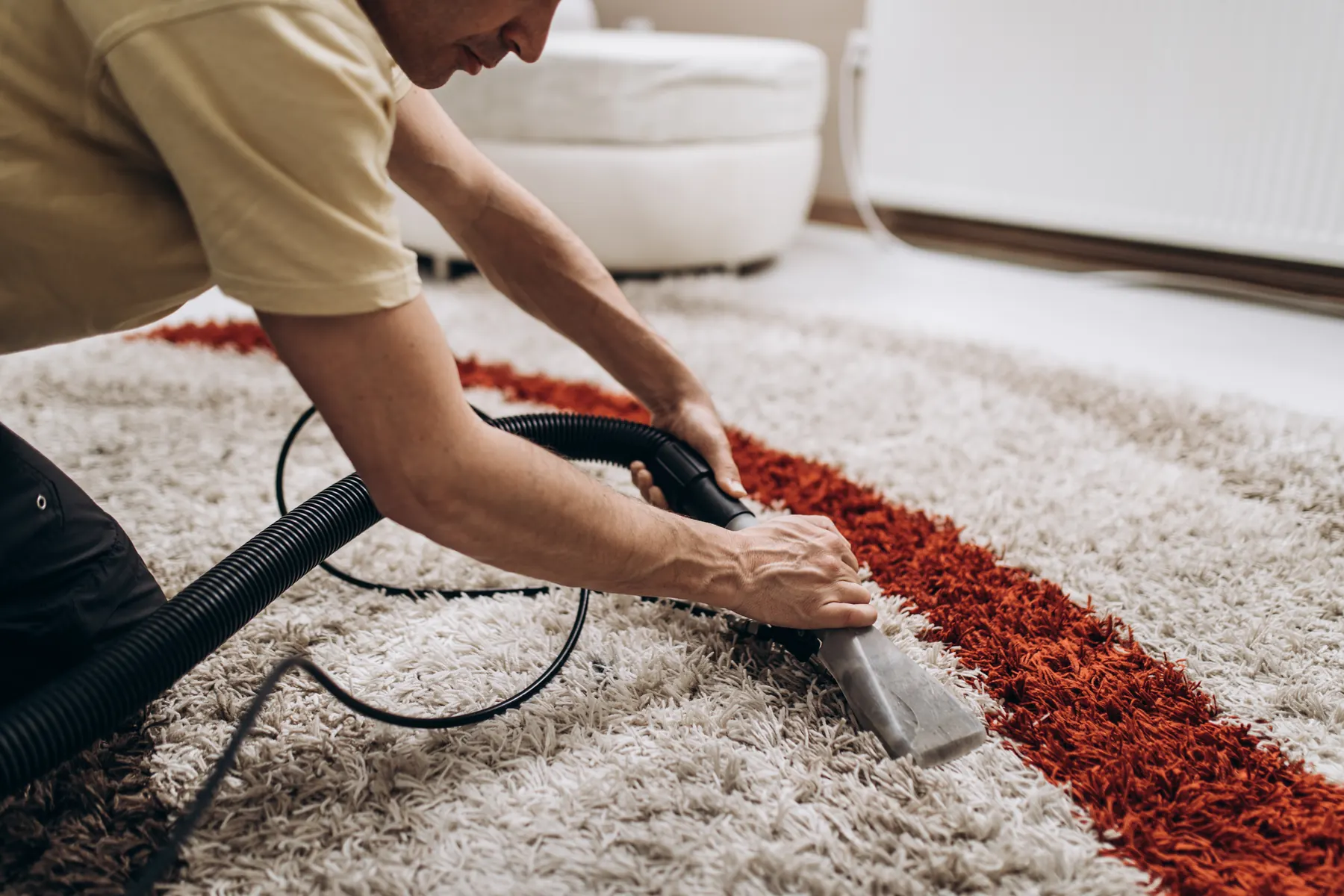
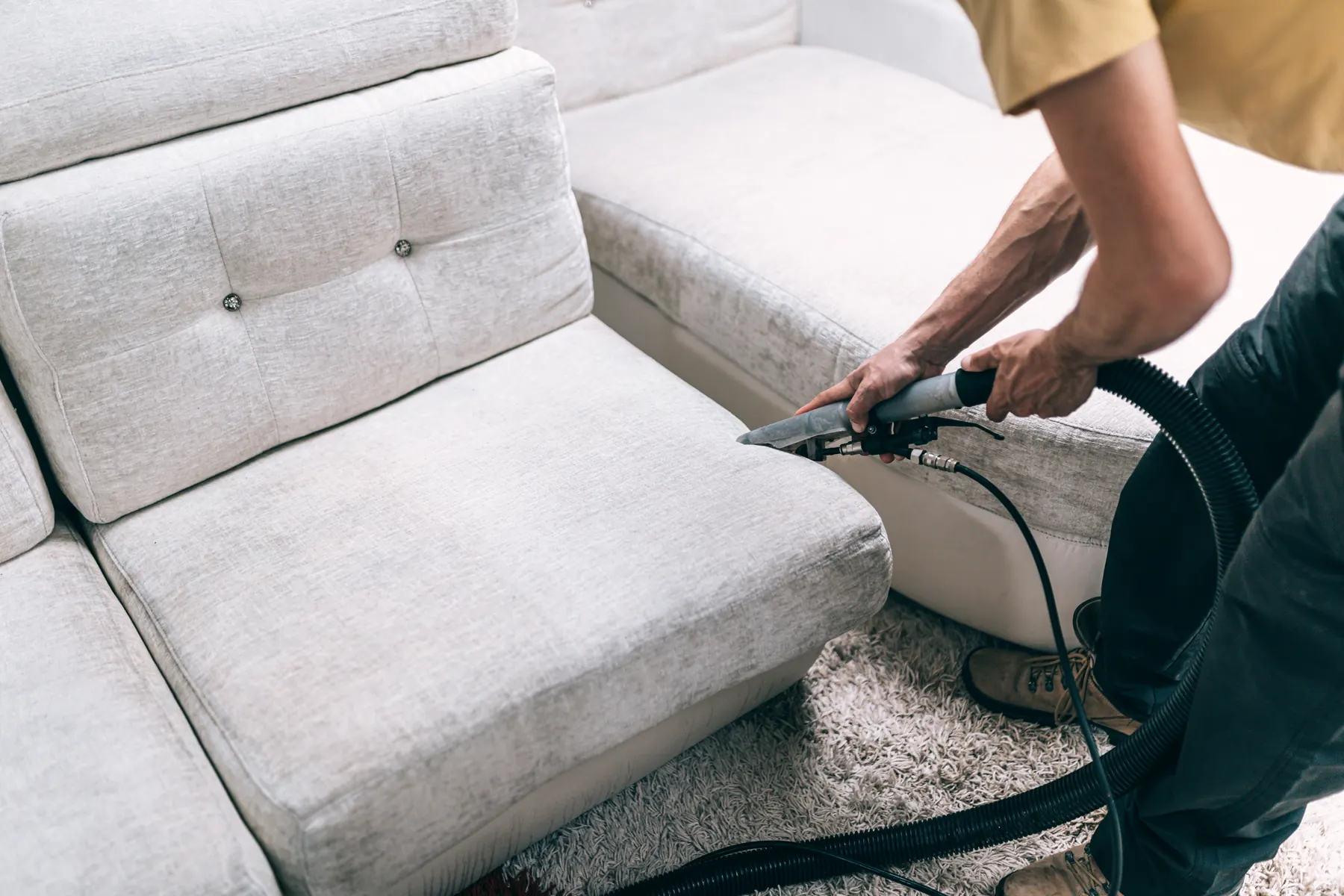
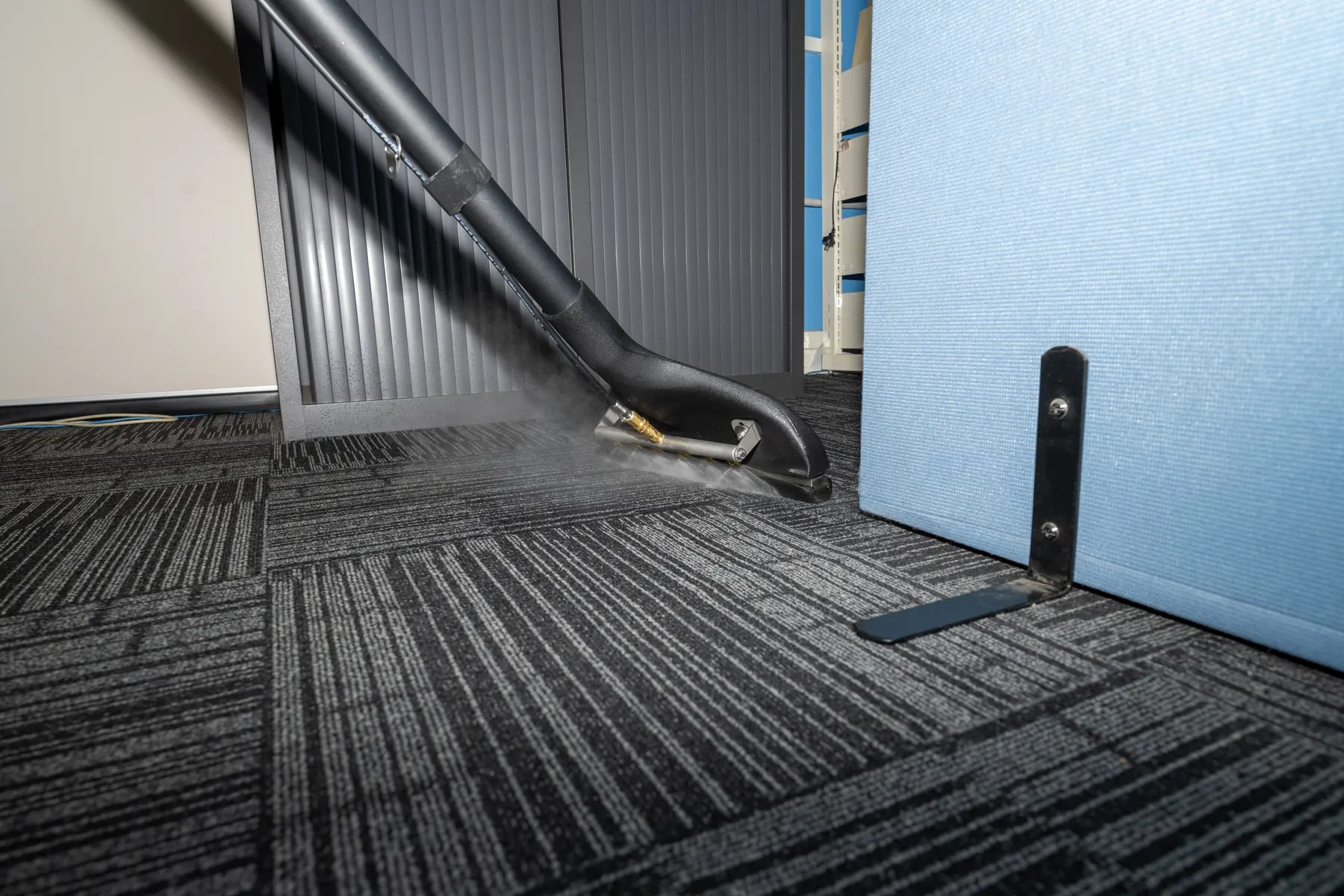
Hot water extraction sprays solution into the pile under pressure and pulls it straight back out through a vacuum slot in the same head. Most of the water leaves with the soil, in the recovery tank. What stays behind is moisture held in the fibre and, depending on the carpet, some in the backing. The carpet should feel cool and slightly damp when the work finishes, like a towel that has been through a spin cycle. It should not feel wet underfoot.
So drying is not about removing a puddle. It is about moving water vapour from the fibre into the air and then getting that air out of the room.
The four variables
Airflow is the big one. Still air above a damp carpet becomes saturated air, and saturated air stops accepting moisture, so the carpet stops drying. Moving air across the surface keeps the exchange going.
Humidity sets the ceiling. If the air outside is already heavy, opening the windows imports moisture rather than removing it, and everything slows down.
Pile depth and construction matter. Thick plush and shag hold more water than a low loop, and wool holds more than nylon or polypropylene because the fibre itself absorbs.
How much water went in is the last one. Heavy soiling needs more solution and more passes, a pet treatment needs the area flooded and flushed properly, and both take longer to give the water back.
What you can do while it dries
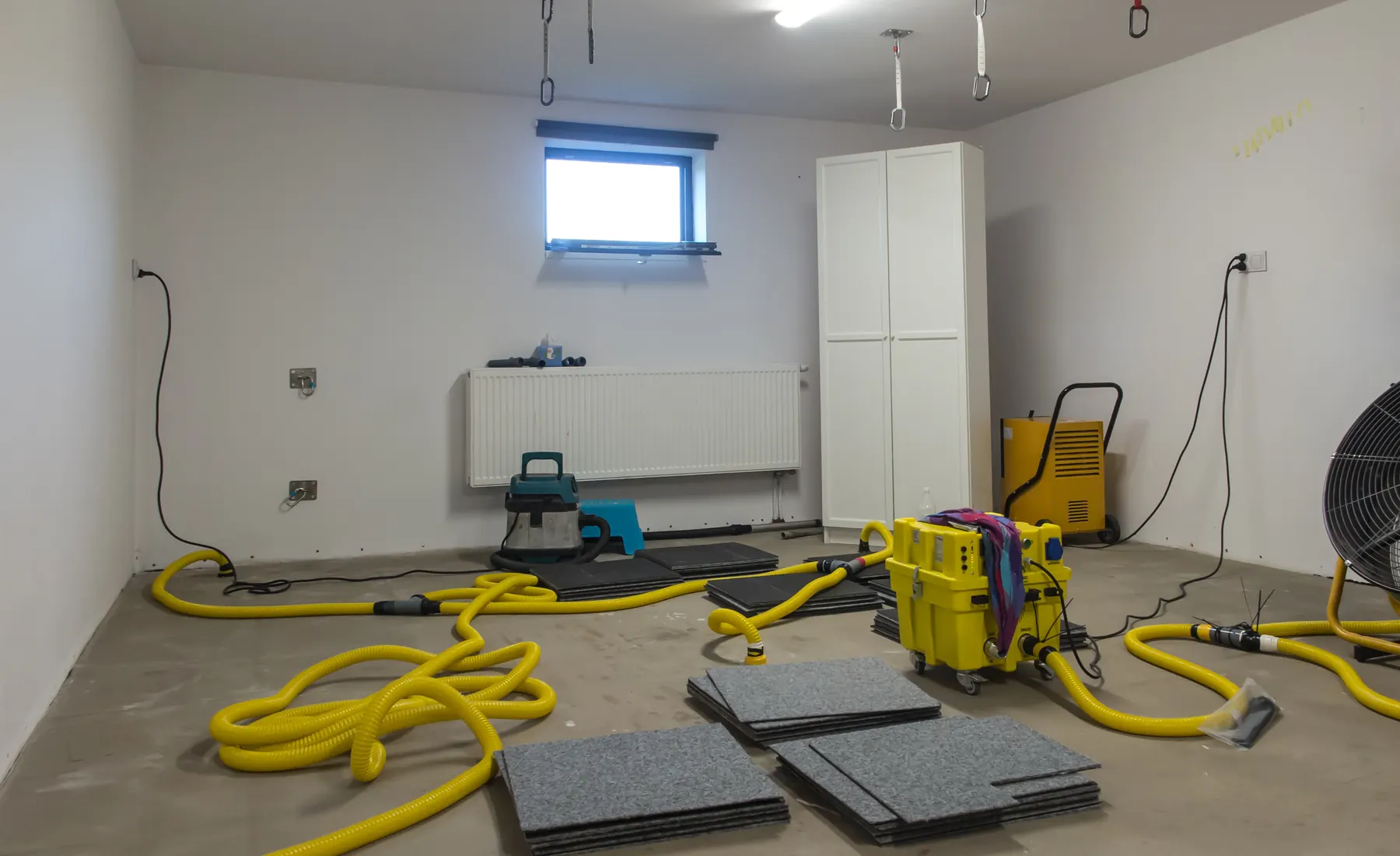
Open windows and interior doors if it is dry outside. If it is humid, do the opposite: keep the windows shut and run the air conditioning, which dehumidifies as it cools. In a basement, run a dehumidifier and empty it.
Run the furnace fan on its continuous setting. That circulates air through the whole house rather than letting it sit in one room, and it costs very little.
Keep pets off, keep children off as much as you can manage, and keep shoes off. Damp pile picks up whatever is on the sole and holds it. Leave furniture out until the carpet is dry; if a piece has to go back early, put foil or plastic under the feet, because wood stain and metal glides bleed into damp fibre and that mark does not come out with the next clean. Eco-friendly solutions are safe around children and pets once dry, and dry is the operative word.
What a technician does to shorten it
Dry passes, first. After the cleaning passes, the wand goes over the same ground with the solution off and the vacuum on, slowly, overlapping. Each dry pass lifts more water, and that is the cheapest drying time available.
Then air movers. A low profile fan aimed across the carpet at a shallow angle peels the saturated layer off the surface and replaces it, which is a different job from a pedestal fan pointed at the middle of the room. On a larger job the movers get repositioned rather than left in one spot.
Technique accounts for the rest: the right amount of solution rather than the most, grooming the pile so it stands up and exposes more surface, and not overwetting an area to chase a stain that needs a hand tool instead.
Still damp after 24 hours
At that point it is a problem rather than a nuisance. Carpet that stays wet means water got into the backing or the underlay, or the room has no air exchange, and damp underlay sitting on a subfloor is exactly the condition mould needs. The smell arrives before the stain does. If your carpet is still damp a day later, something went wrong with either the extraction or the drying, and it needs looking at rather than waiting out.
The other thing damp carpet does is give a stain back. As the remaining moisture travels up the fibre towards the surface to evaporate, it carries dissolved material with it, including whatever was sitting down in the backing. That is wicking, and it is why a patch can look perfect at five o'clock and show a faint ring in the morning. It is fixable, usually with a second pass over that area once it is dry.