
How to clean a Persian or oriental rug, and when not to
A hand-knotted rug is built differently from anything else on your floor. How that construction decides what you can safely do at home, and the signs that it needs a full specialist wash instead.
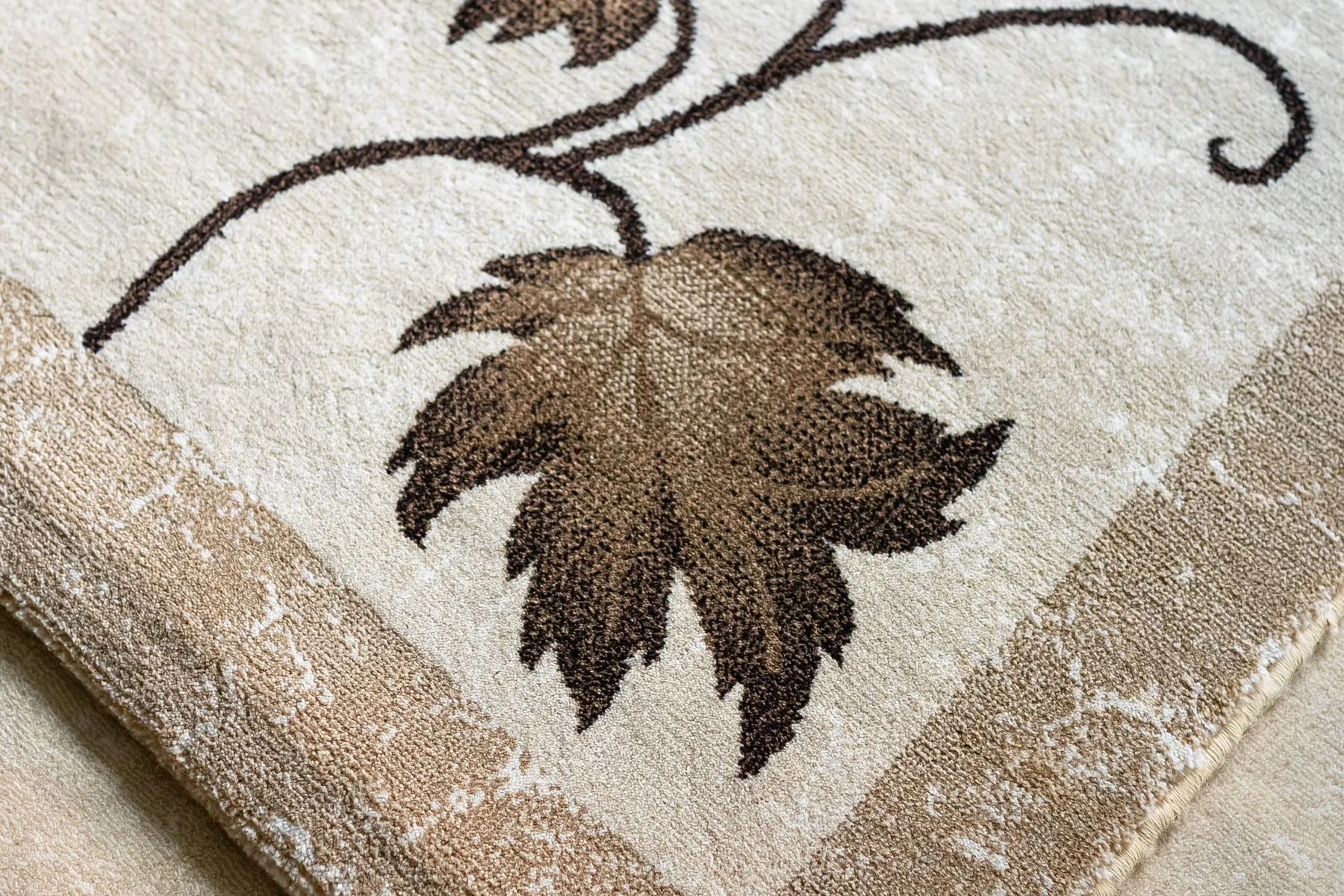
Vacuum a Persian rug gently in the direction of the pile, with suction only, and never run the vacuum over the fringe. Blot spills with cool water. Do not steam it or use a rental machine. A hand-knotted rug that is valuable, silk, very dirty or has dye bleeding needs a full specialist wash, not a home clean.
"Persian" gets used loosely for any rug with a traditional pattern. The advice below is for genuinely hand-knotted rugs, Persian or otherwise. If yours turns out to be machine-made, it is usually much less fussy, and the FAQ below shows how to tell.
How is a Persian rug built, and why does it matter?
A hand-knotted rug is a woven foundation with row after row of short tufts of yarn knotted around it, and the foundation is what decides how it reacts to water. Understanding that one fact explains almost every rule that follows.
Three parts matter:
- The pile. Usually wool, sometimes silk or a wool and silk mix. This is the surface you walk on, and the fibre chemistry behind it (heat, pH and dye) is covered in how to clean a wool rug, including the dye test. Do that test before any liquid goes on.
- The foundation. The warp threads run the length of the rug and the weft threads cross them. On most Persian rugs they are cotton. Cotton swells when wet, dries slowly, and browns if it stays damp.
- The fringe. On a hand-knotted rug the fringe is not trim. It is the ends of the warp threads, so it is part of the structure. Tear it and the end of the rug starts to unravel.
That construction is why a Persian rug is not cleaned like fitted carpet. Fitted carpet is usually nylon or polypropylene on a synthetic backing that shrugs off hot water. A rug with a wool face and a cotton foundation can shrink unevenly, brown along the fringe, or bleed one colour into the next if it is soaked and dried badly.
Silk is a separate case. Silk pile is weaker when wet, marks easily, and dyes on silk are often less stable. Rugs sold as "art silk" or "bamboo silk" are usually viscose, which is fragile in a different way, and the area rug cleaning page explains that one plainly.
What can you safely do at home?
At home you can vacuum, rotate, deal with fresh spills and keep the fringe tidy. Everything beyond that carries more risk than it is worth on a good rug.
Vacuum, gently. Consumer Reports' guide to caring for antique and area rugs warns that the rotating brush on an upright vacuum is too harsh for oriental rugs and recommends a canister or a suction-only setting. It also says to vacuum in the direction the pile is meant to lie. Run your hand along the rug: one way feels smooth, that is the direction.
Keep the vacuum off the fringe. Vacuum up to it, not over it. A brush roll or a strong nozzle will catch the fringe, wrap it and tear it. Comb it straight with your fingers instead.
Do the back now and then. Turning the rug and vacuuming the back shakes out the grit that works down into the base of the knots, where it grinds at the pile.
Rotate it. Turning the rug end for end now and then evens out traffic wear and sun fading.
For a fresh spill:
- Lift anything solid with a spoon or the edge of a card.
- Blot with a dry white cloth, pressing down, from the outside of the spill in. Do not rub, which spreads it and roughens the pile.
- Dab with a cloth dampened, not wet, in cool water.
- Blot dry again, then put a folded dry towel under the spot with a weight on top for a while.
- Raise that part of the rug and run a fan across it so it dries from both sides.
Do not:
- Use a steam cleaner, a rental carpet machine or hot water.
- Use bleach, ammonia, oxygen powders or general carpet shampoo.
- Soak the rug in a bathtub or hose it down on the driveway.
- Bleach the fringe white.
- Hang a wet rug, which can distort it under its own weight.
Consumer Reports also suggests a professional clean every one to three years, depending on household traffic, and the same article quotes advice to follow the rug maker's own cleaning instructions where there are any.
When should it be washed in place, and when sent to a rug plant?
A sound wool rug with ordinary soil and stable dyes can often be cleaned where it lies, with the floor protected. A rug that is silk, antique, bleeding, full of urine or heavily soiled needs a full immersion wash with controlled drying, which a living room cannot give it.
| Condition | Usually cleaned in place? | Why |
|---|---|---|
| Wool pile, stable dyes, general soil | Often | Low-moisture cleaning matched to wool, with the floor protected |
| Dye bleeds in the corner test | No | Needs controlled washing and fast drying, or no wet clean at all |
| Silk or viscose pile | Rarely | Weak when wet, marks and yellows easily |
| Pet urine through to the foundation | No | Needs flushing through the whole thickness, then fast drying |
| Very heavy soil or years since a clean | No | Needs thorough dusting and a full wash |
| Antique or fragile foundation | No | Handling and soaking are risks in themselves |
Pet urine is the case that surprises people. It goes through the pile into the cotton foundation, where it can stain the fibre and, left long enough, weaken the cotton. Why surface treatment does not reach it is explained in how to get pet urine smell out of carpet, and a rug's foundation behaves the same way.
There are also honest limits to any wash. Dye that has already run, sun fading, moth damage and wear down to the foundation are not soil, and no cleaning method reverses them.
Book a look at it
We clean rugs at your home or business, where they lie; we do not take them away. Most wool rugs are fine cleaned that way. If yours is silk, antique or full of urine, we will tell you before any water goes on that it needs a full immersion wash at a rug plant rather than attempt it. AllCleaner's area rug cleaning starts with identifying the fibre and the construction and testing the dyes, and it is quoted per rug once we have seen it. Call 647-697-7435 or request a free quote. The price is confirmed before work starts.

Short answers.
- How do you tell a hand-knotted rug from a machine-made one?
- Turn a corner over. On a hand-knotted rug the pattern shows clearly on the back, the knots are slightly uneven, and the fringe is the ends of the warp threads running through the whole rug. A machine-made rug usually has a very regular grid on the back, sometimes a latex or canvas backing, and a fringe sewn or glued on at the ends.
- Why are the fringes on my rug going yellow or brown?
- The fringe is usually cotton, and cotton browns when it gets wet and dries slowly, or when dirty water wicks into it from the pile. Spills, pet urine and a careless wet clean are the usual causes. Bleach makes it worse in the long run, because it weakens the cotton until it breaks off at the knot.
- Should a Persian rug be cleaned on top of hardwood?
- Not wet, unless the floor is protected. Moisture passes straight through a rug's foundation into the boards, and loose dye can stain pale wood. Dry vacuuming in place is fine. Any wet cleaning needs the rug lifted clear of the floor or a waterproof layer under it first.
Filed under Carpets and rugs. More in the blog.
Keep reading
More on carpets and rugs, and close to it.

Carpet cleaning per room or per square foot: which is fairer?
Two ways of turning a carpet into a price, and the minimum charge that sits under both. How each one is worked out, where each one is fair, and four homes reasoned through both ways.

How to prepare for carpet cleaning, and what to do afterwards
What to do the day before, how to settle the furniture question, what to tell the crew about your stains, and how to look after the carpet while it dries so the result lasts.
Renting a carpet cleaner vs hiring a professional
The rental machine and the professional one work on the same idea. The difference is how much water each puts in, how much it takes back out, and how much of your Saturday it costs you.





