
Toilet overflowed: how to clean up, and when it is not a DIY job
Most toilet overflows end with a mop and a bad mood. Some end in the ceiling of the room below. How to stop it, how to tell clean from contaminated, and where the line is between a clean-up and a restoration job.
Water on the floor now? Call 647-697-7435, answered 24 hours
Stop the water first: close the shut-off valve on the pipe behind the toilet, or lift the float in the tank so it stops filling. Then judge the water. An overflow of clean tank water is a small job. Water from the bowl is contaminated, and anything with waste in it is treated like sewage. If it went through the floor or into carpet, it needs professional drying and cleaning.
The difference between those cases is the whole article. The volume of water matters less than where it came from and where it went.
How do you stop a toilet overflowing?
Turn off the supply, then deal with the blockage. The toilet keeps refilling from the tank until either the supply is closed or the float tells the valve to stop.
- Close the shut-off valve. It is the small oval or round handle on the pipe coming out of the wall or floor behind the toilet. Turn it clockwise.
- If it will not turn, lift the float. Take the tank lid off and lift the float arm or float cup by hand. That stops the fill valve while you deal with the supply.
- Still running? Close the main. The main water valve stops everything in the house. In a condo, call building management if your unit has no shut-off.
- Keep electrics dry. Unplug anything sitting on the wet floor, such as a heater or a power bar, only if you can reach the plug without standing in water.
- Do not flush again. Clear the blockage with a plunger or a closet auger first.
How dirty is the water, and why does it matter?
The restoration trade sorts water into three categories by how contaminated it is, under the IICRC S500 standard for professional water damage restoration. The category decides what can be dried and kept, what has to be removed, and how the people cleaning it protect themselves.
| Where the overflow came from | Category in practice | What it means for clean-up |
|---|---|---|
| The tank (clean supply water) | Clean water | Dry it. Carpet and floors often saved |
| The bowl, no waste | Contaminated | Clean and disinfect before drying |
| The bowl, with waste | Treated as sewage | Remove porous materials, disinfect, then dry |
| Coming up from a floor drain or another fixture | Sewer backup | See sewer backup clean-up |
Clean water does not stay clean once it has run across a bathroom floor and into a ceiling or a carpet. It picks up what it touches, and wet material left too long gets worse, not better. If you are not sure which row you are in, treat it as the worse one.
Health Canada warns of a very real and significant danger of infection from breathing the air in an area contaminated by sewage. It advises that children, pregnant women and people with respiratory problems avoid handling sewage-contaminated water and materials, and lists disposable gloves, an N95 mask and goggles as clean-up supplies.
What does a safe DIY clean-up look like?
For a tank overflow, or a small amount of bowl water on tile that has not gone anywhere else, you can handle it yourself. Keep it contained and keep it quick.
- Gloves, and eye protection for bowl water. Keep children and pets out.
- Soak it up with disposable towels or a wet-dry vac. Not the household vacuum, and not a carpet cleaner.
- Wash the floor and the toilet base with detergent and hot water. Then disinfect hard surfaces.
- Bag towels and anything soft that got soaked. Bath mats and rugs from a bowl overflow go in a hot wash or in the bin.
- Dry the room. Open the door, run the bathroom fan and a fan on the floor.
- Check the edges. Look along the baseboard, under the vanity and at the ceiling of the room below over the next day.
When has it gone beyond a mop and a bucket?
When the water has left the tiled floor. The usual signs:
- It ran into a carpeted hallway or bedroom.
- There is a stain, a drip or a bulge in the ceiling below.
- The baseboard, the vanity base or the door casing is wet or swelling.
- The flooring is vinyl plank, laminate or hardwood, and water got under it.
- There was waste in it, and it touched anything soft.
- The bathroom floor feels soft or the toilet rocks.
If the water reached carpet, underlay or the ceiling below, the contaminated part is out of reach of household disinfectant. Call before you dry it, so it is cleaned rather than sealed in. Drying contaminated material in place leaves the contamination where it was, now dry and invisible.
The professional version is extraction, removal of the porous materials the dirty water reached, cleaning and disinfecting what is left, then drying with dehumidifiers and air movers, with moisture readings to confirm it. Whether carpet can stay depends on the category and the time, which can wet carpet be saved goes into.
What if it went into the unit below?
In a condo, an overflow that reaches the unit below raises the question of who pays, and the answer depends on the corporation's declaration, its by-laws and both owners' policies. Tell building management and your insurer early, and photograph your side before anything is cleaned. Condo water leak: who pays in Ontario explains how it usually works.
What to do now
If the overflow has reached carpet, a ceiling or the floor below, call AllCleaner's emergency line on 647-697-7435. It is answered 24 hours. We work out how far the water went, remove what cannot be cleaned, disinfect and dry what can, and document it for your insurer. The price is confirmed before work starts. Larger jobs fall under water damage cleaning and restoration.
Short answers.
- Can carpet be cleaned after a toilet overflow?
- If the water came from the tank and was dealt with quickly, often yes: extracted, cleaned and dried. If it came from the bowl, it depends on how much, how long it sat and whether waste was in it. Carpet and underlay soaked with water containing waste are normally removed, because the contamination sits in the backing and pad.
- Why is there a stain on the ceiling below the bathroom after an overflow?
- Water ran across the bathroom floor, past the toilet base or the edge of the flooring, and into the ceiling cavity below. The stain shows where it reached the drywall. If the water was from the bowl, the cavity is contaminated as well as wet, and it needs opening, cleaning and drying rather than paint.
- Should I flush again to see if it is fixed?
- No. A second flush on a blocked toilet just sends another bowl of water onto the floor. Plunge with the water shut off, or use a closet auger, and only turn the supply back on once the bowl drains normally. If several drains in the house are slow or gurgling, the blockage may be further down and you need a plumber.
Filed under Water damage. More in the blog.
Keep reading
More on water damage, and close to it.
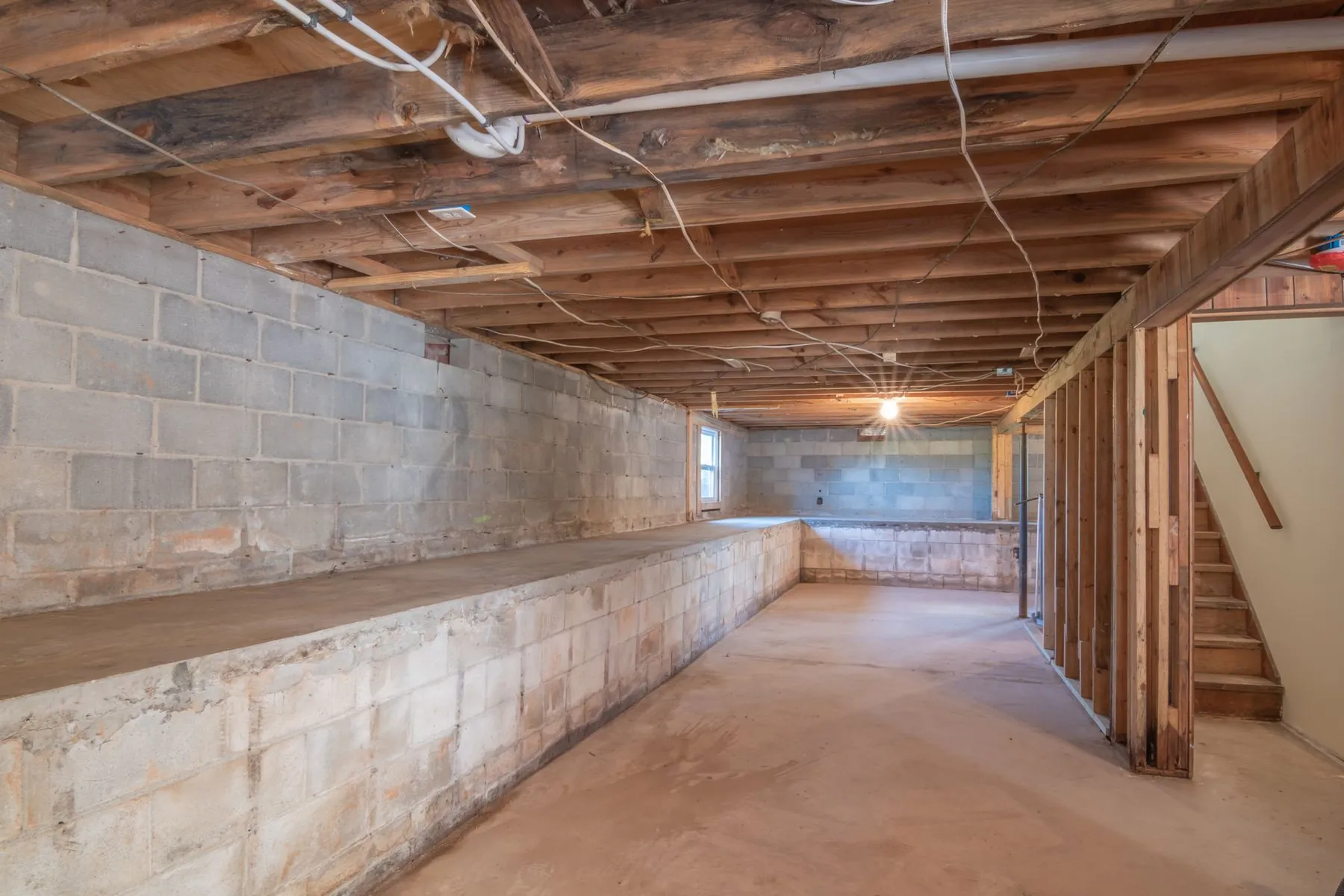
Why does the basement leak after heavy rain or a thaw?
The basement is dry all year, then a downpour or the March thaw puts water on the floor. Where it is getting in, what the City of Toronto tells homeowners to fix outside, and what to do about what is already wet inside.

Can hardwood floors be saved after water damage?
Cupped boards look ruined the morning after a leak. Often they are not. What decides whether a hardwood floor can be dried in place, and what the moisture meter has to say before anyone reaches for a sander.
Can wet carpet be saved after a leak or flood?
Three things decide it, and you can check all three from the doorway. Where the water came from, how long the carpet has been wet, and what is underneath it.





