
How to get urine out of a mattress, and when it will not come out
A mattress is a sponge with a fabric cover. Everything that goes in goes down, and very little comes back up by itself. What to do at two in the morning, what to do with an old yellow ring, and the honest limit of any clean.

Strip the bed and blot, do not scrub, because foam pulls liquid down. Treat the spot with an enzyme cleaner made for urine, or a little mild detergent in cool water, using a damp cloth rather than pouring. Once it is nearly dry, use baking soda to draw out the last moisture and smell. Old or repeated accidents often reach the foam, where home methods stop working.
What do you do the night it happens?
Get liquid out before anything goes in. The cover and the top layer still hold most of it, and every minute it sinks further.
- Strip everything. Sheets, mattress protector and any topper go straight in the wash. Check the protector: if it is a waterproof one, the mattress may be dry.
- Blot with pressure. Press a thick, dry towel on the wet patch and lean your weight on it. Replace the towel as it gets wet and keep going until a fresh one comes up almost dry. Do not rub, which spreads urine sideways and pushes it into the seams.
- Treat with a damp cloth, not a pour. Use an enzyme cleaner made for urine, following the label, or a small amount of mild dish detergent in cool water. Dampen a cloth and dab it over the area, working from the outside in. Cool water matters: heat sets urine stains and odour.
- Blot again. A dry towel, firm pressure, several times. You are taking out the cleaner and the urine it has loosened.
- Dry it properly. Stand the mattress on its side if you can, or prop it so air reaches both faces. Run a fan across it and open a window if the air outside is dry. Use the sofa or a spare bed for the rest of the night.
- Finish with baking soda. Once the area is only slightly damp, sprinkle baking soda over it, leave it as long as you can, then vacuum it off with the upholstery attachment.
Do not make the bed on a damp mattress. A protector over damp foam traps the moisture, and the smell builds instead of fading.
Children and pets. The method is the same whether the accident was a child or a cat. Cat urine is stronger and cats return to a spot they can smell, so the enzyme step matters more there. For carpet as well as the mattress, see how to get pet urine smell out of carpet.
How do you treat a stain that has dried?
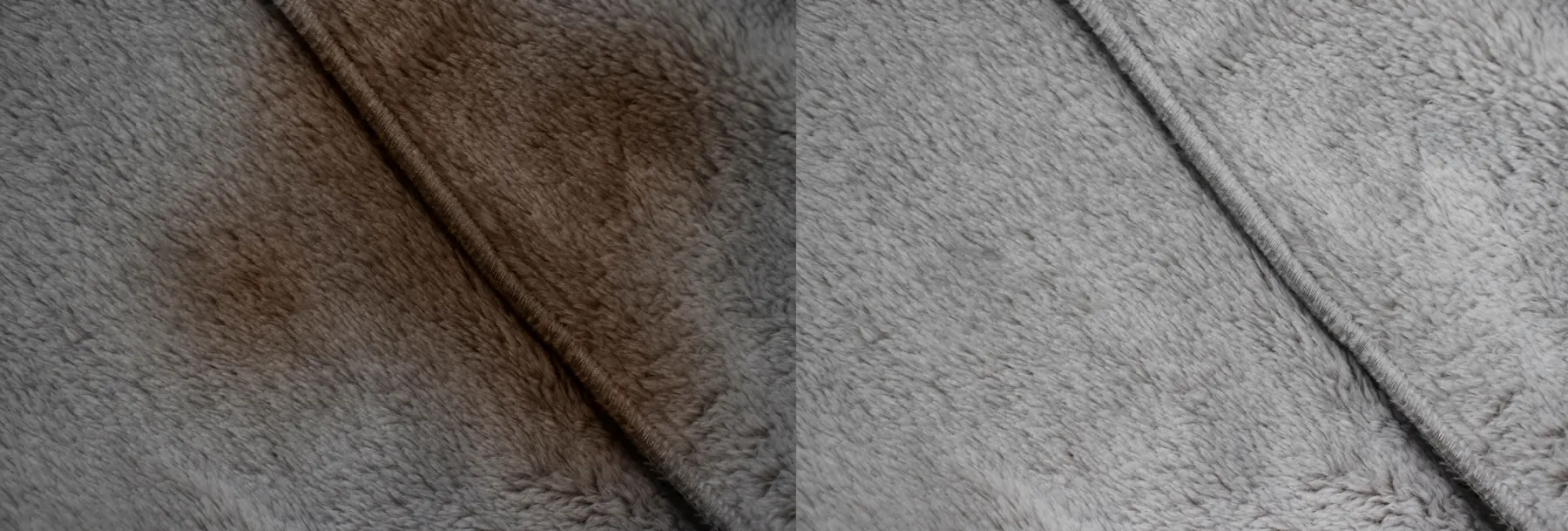
Rehydrate it, lightly. A dried urine stain is a yellow ring of salts and residue sitting in the cover and the top of the foam. It will not lift dry.
- Vacuum the area so you are not working dust into it.
- Dampen, do not soak. Mist the stain with cool water or press a damp cloth on it for a few minutes.
- Apply the enzyme cleaner. Enough to reach as deep as the stain went, which for a dried ring is usually the cover and the layer just beneath. Keep the area damp for the contact time on the label; a damp towel laid over it stops it drying out early.
- Blot hard, then dry fast. The same towels, the same fan, the same rule about not covering it until it is dry.
- Judge it dry. A mattress can look clean when wet and show a ring again as it dries. Wait until it is completely dry before a second round.
Expect the yellow to fade rather than vanish. Urine left for a long time can change the colour of the fabric itself, and no cleaner puts colour back. A faint shadow with no smell is a good result.
What not to do
- No pouring and no soaking. A wet mattress dries from the outside in and can stay damp inside long after the surface feels dry.
- No steam or hot water. Heat sets the stain and the smell.
- No ammonia. It smells like urine to animals and can bring a pet back to the spot.
- No bleach. It damages the cover fabric and stays in it, next to skin.
- No perfume sprays. They mask the smell for a few days. The urine is still there.
When has it gone past a home clean?
When the accidents are repeated, or the smell comes back on warm or humid nights. Both mean urine has reached the foam, where a cloth cannot reach and the residue sits for a long time.
A professional clean works on the same principle as the steps above, with suction doing the blotting. The urine treatment goes in, is given time, and is flushed and drawn back out by an extraction head, pass after pass, so the loosened residue leaves the mattress instead of drying in it. The honest limit is that it reduces deep odour in foam rather than always removing it. If a mattress has absorbed accident after accident over months, you should be told that it may improve without becoming odour-free, before you book.
It is also worth reading your warranty before an accident becomes a stain. Some makers will not handle a claim on a stained mattress. Sealy's Australian guarantee, for example, excludes stains on the mattress fabric and lets the company refuse service on a mattress found stained or in an unsanitary condition. Terms vary by brand and country, so check your own, and treat a waterproof protector as part of the bed.
One more boundary. If you are stripping the bed because of bites rather than an accident, cleaning is not pest treatment. Health Canada's bed bug page explains what is.
Call 647-697-7435 or request a free quote for mattress deep cleaning. You will be told what is likely to come out, and the price is confirmed before work starts. The solutions used are safe around children and pets once dry. For how often a mattress should be cleaned in general, see how often should you clean a mattress.
Short answers.
- Will baking soda alone get the smell out?
- Not on its own. Baking soda absorbs some moisture and odour from the surface, which helps once the treated area is nearly dry. It does nothing to urine that has already soaked into the foam below, which is where a returning smell comes from. Treat the urine first, then use baking soda to finish.
- Is hydrogen peroxide safe on a memory foam mattress?
- Check the maker's care label first, because many say to use only a mild soap and water. Peroxide is a bleach and can mark a coloured cover. The bigger risk with memory foam is liquid of any kind getting into the foam, which dries very slowly. Use any solution sparingly, on a cloth, never poured.
- Does a mattress protector stop urine reaching the foam?
- A waterproof protector that covers the whole top surface stops most of it, which is why mattress makers recommend one. It needs to be the waterproof kind, fitted properly, and washed after an accident. A thin quilted cover without a waterproof layer slows liquid down but does not stop it.
Filed under Upholstery and mattresses. More in the blog.
Keep reading
More on upholstery and mattresses, and close to it.

Can you clean a sofa yourself?
Sometimes, and the tag under the seat cushion tells you which times. What the four letters mean, what a home machine does well, and where it leaves you with a water ring.
How often should you clean a mattress?
The sheets go in the wash every week or two. The thing underneath them goes years. A sensible rhythm, what you can do yourself, and what only extraction reaches.

Why does the basement leak after heavy rain or a thaw?
The basement is dry all year, then a downpour or the March thaw puts water on the floor. Where it is getting in, what the City of Toronto tells homeowners to fix outside, and what to do about what is already wet inside.





