
How to get blood out of carpet without setting it
Blood is the stain where the usual instinct, warm water and a good scrub, does the most harm. Why it behaves differently, how to treat it fresh or dried, and what to do when it has gone through to the pad.

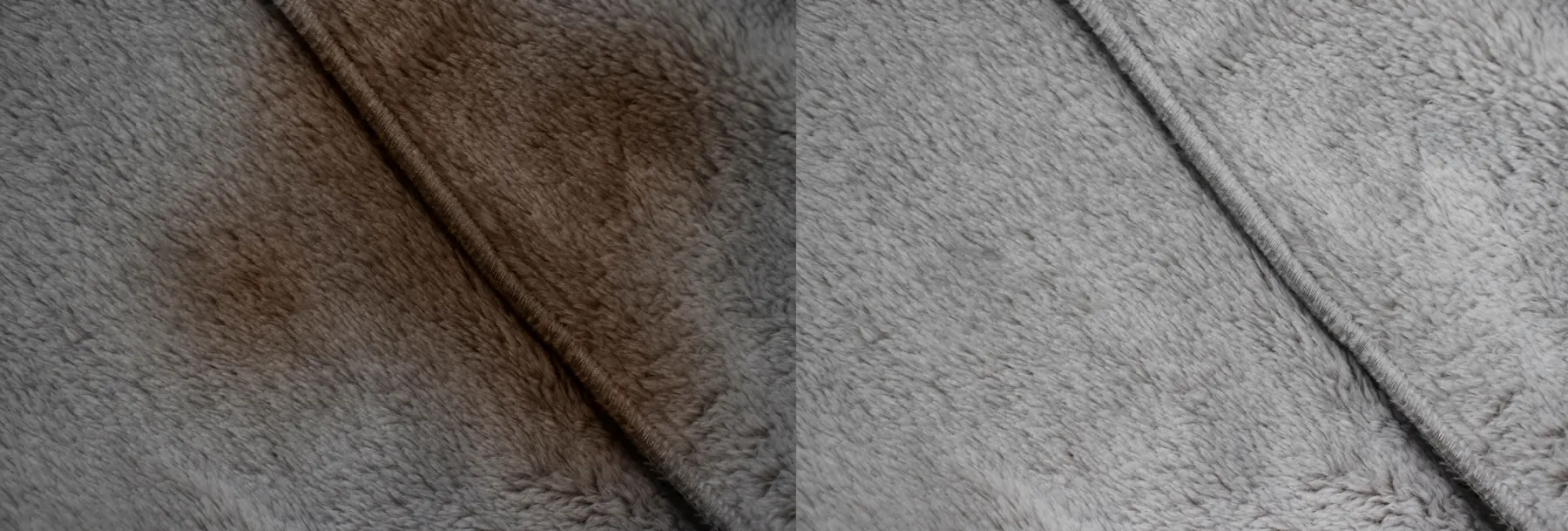
Use cold water only. Blood is protein, and warm water or a hot steam machine cooks it into the fibre. Blot, dampen with cold water, blot again, then use a little mild dish detergent in cold water. For a dried stain, soften it with cold water first. Test peroxide on synthetic carpet before using it, and never use it on wool.
The rules that apply to every stain, and the table by stain type, are in the carpet stain guide. This page goes further on blood, because it is the one stain where the usual method has to be reversed.
Why does heat make a blood stain permanent?
Heat changes the protein in blood from something that dissolves in water into something that does not. It is the same thing that happens to an egg white in a pan: clear and runny one moment, solid and white the next, and no amount of rinsing turns it back. In carpet, that set protein grips the fibre and holds the red-brown colour with it.
That is why the advice for most spills, a little warm water and detergent, is wrong for blood, and why a home steam cleaner or a carpet machine with a heater should not go near a blood spot. The Carpet and Rug Institute's tips page says to rinse the spot quickly with cool water and mix its detergent solution with cool water too. The same rule applies to other protein stains such as vomit, milk and egg, and heat sets urine too.
Time works against you in a quieter way. As blood dries, it bonds more firmly to the fibre and darkens. A fresh spot often comes out completely with water alone. A spot found days later rarely does.
How do you treat fresh and dried blood?
Put on disposable gloves first. Then work through it in order.
- Blot. Press a white cloth or paper towel on the spot, lift, and move to a clean part. Do not rub, which spreads blood sideways into clean pile.
- Cold water on a cloth. Dab cold water onto the stain from the edge inward and blot again. Repeat until the cloth stops turning pink. For a fresh spot, this may be all it needs.
- Cold detergent solution. Use the CRI's recipe: a quarter teaspoon of clear, non-bleach dish detergent in a cup of cool water, never stronger. Dab it on from a cloth, leave it a few minutes, then blot.
- Repeat while it transfers. The CRI's blood entry says to keep using the same solution while the stain is still coming off on the cloth, and to change only when it stops.
- Rinse with cold water. The CRI finishes with a cold water rinse, then blotting until no moisture remains. A light mist from a spray bottle rinses without soaking the backing.
- Dry it fast. A fan on the spot helps. The longer the backing stays damp, the more chance of a brown ring wicking up as it dries.
For a dried stain, rehydrate before you clean. Hold a cloth soaked in cold water on the stain for several minutes so the blood softens, then blot and go through the steps above. Expect several rounds. If the detergent stops lifting colour, an enzyme cleaner made for organic stains is the reasonable next try, tested first and rinsed out afterwards.
Hydrogen peroxide is the classic home trick for blood, and it fizzes on contact. It is also a bleach. On light synthetic carpet, ordinary pharmacy strength, dabbed on after a hidden-spot test, can lift what is left. On wool, silk, viscose, or any coloured or patterned carpet, it can leave a pale patch that is worse than the stain. Do not use it there.
On wool carpet, stay with cold water and wool-safe products. Wool carpet maker Cormar's stain guidance for blood is clean water blotted until no more colour transfers, followed by a wool-approved stain remover, with every product tested first.
What not to do
- No warm or hot water, no steam, no hair dryer to speed drying.
- No scrubbing brush.
- No chlorine bleach, which strips the carpet's colour.
- No ammonia on wool, and no mixing products. Health Canada warns never to mix bleach with ammonia.
- No pouring. Soaking the spot drives blood into the backing and underlay.
What do you do if it has soaked through to the underlay?
Treat it as a different job. If a lot of blood went down in one place, or the carpet feels damp when you press beside the stain, it has gone past the pile into the backing and probably the pad. Cleaning the top lifts the surface colour, and then the blood below rises back up as the carpet dries.
What it needs is extraction from below the surface, flushing that area with cold water and pulling it straight back out, repeatedly, and then checking the underlay. Pad that has soaked up blood can hold it and smell, and sometimes the honest fix is to lift the carpet and replace that section of underlay. You should be told that before paying for a clean that cannot reach it.
A large amount of blood from an injury is not a stain-removal question at all. That needs a specialist biohazard cleaning company.
When should you stop and call?
Stop if the stain is large, soaked through, has had heat or several products on it, or is on wool, silk or viscose. Stop if it is on a sofa or a mattress, where liquid sinks into foam and does not come back out easily. The mattress cleaning guide covers why.
Call 647-697-7435 or request a free quote. AllCleaner will look at the fibre and the stain, tell you what is likely to come out, and confirm the price before work starts. Say it is blood when you book, because that changes how the spot should be treated. See carpet cleaning, area rug cleaning or mattress deep cleaning. If a mark comes back after it seemed gone, why carpet stains come back explains the two usual reasons.

Short answers.
- Does salt help get blood out of carpet?
- Not in any way that cold water does not do better. Salt is not part of the Carpet and Rug Institute's blood method, and any left in the pile attracts moisture and can leave a white mark of its own. Blot, then work with cold water and a mild detergent solution.
- Will an enzyme cleaner remove an old blood stain?
- It can help. Enzyme cleaners made for organic stains break down protein, which is what blood is. Test it in a hidden spot, give it the contact time on the label, keep it damp rather than soaked, then rinse with cold water and blot dry. An old stain may lighten without disappearing.
- Is it safe to clean up someone else's blood myself?
- For a small spot such as a nosebleed, wear disposable gloves, bag the paper towels, and wash your hands well afterwards. A large amount of blood from an injury is a different job, for a specialist biohazard cleaning company rather than a carpet cleaner or a household spot kit.
Filed under Stains and odours. More in the blog.
Keep reading
More on stains and odours, and close to it.
Carpet stain guide: what to use on which stain
A carpet stain that ends up permanent is rarely the fault of the spill. It is usually set by scrubbing, hot water and the third product from under the sink. The rules that apply to everything, a table by stain, and the point where you should put the cloth down.

How to get candle wax out of carpet
Wax is the one stain you should let sit. Most of it comes out as dry flakes, the rest needs careful heat, and a coloured candle leaves a dye problem that is separate from the wax.

How to get red wine out of carpet, fresh or dried
Red wine is tannin plus a strong natural dye, which is why it can look worse after you clean it than before. The first minutes, the dried stain, and the three things people reach for that make it permanent.




