
How to get red wine out of carpet, fresh or dried
Red wine is tannin plus a strong natural dye, which is why it can look worse after you clean it than before. The first minutes, the dried stain, and the three things people reach for that make it permanent.
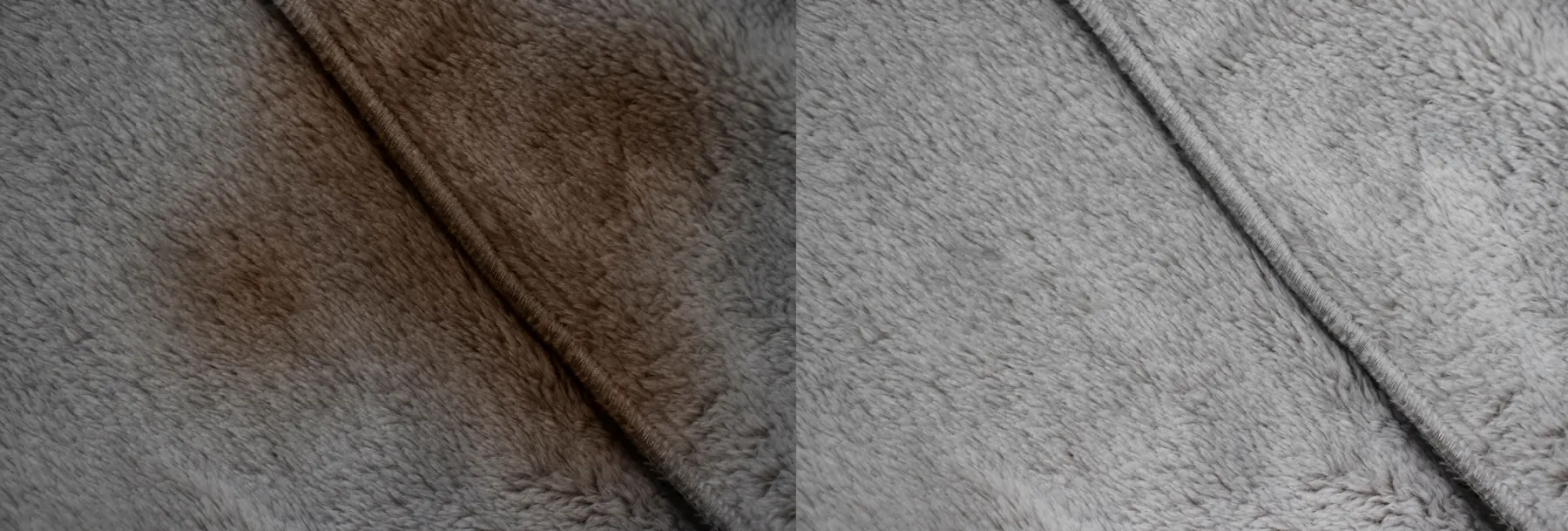
Blot up as much wine as you can with a white cloth, pressing down, without rubbing. Rinse with cool water and blot again, then treat what is left with a small amount of mild dish detergent in water, applied from a cloth. Hot water and scrubbing set the dye. Peroxide can lift what remains on light synthetic carpet, but test it first and never use it on wool.
The general rules for any stain are in the carpet stain guide. This page is the detail for wine, and the same method works for coffee, tea and dark fruit juice.
What do you do in the first minutes?
Get liquid out before you put anything in. Every product you add now has to come back out later, and the wine is still mostly in the pile.
- Blot hard. Fold a white towel, press it on the spill and put your weight on it. Lift, turn to a dry part, press again. Keep going until the towel comes up nearly clean. This one step decides most of the result.
- Rinse with cool water. Dampen a cloth, not the carpet, and dab it over the stain from the edge inward. Blot dry. Repeat two or three times. You are diluting the dye so less of it is left to bond.
- Use the detergent solution. The Carpet and Rug Institute's wine entry starts with a quarter teaspoon of clear dish detergent in a cup of lukewarm water, and warns never to make it stronger. Put it on a cloth, work it in from the edges, wait a few minutes, then blot.
- Keep going while it transfers. The CRI's rule is to repeat while the stain is still coming off on the cloth. When the cloth comes up clean, stop using that solution.
- Rinse out the soap. Dab with clean water and blot. Detergent left in the pile turns into a grey patch within weeks.
- Weight it while it dries. Lay a thick, folded white towel over the spot with something heavy on top, such as a stack of books on a plastic bag. As the carpet dries, any wine still in the backing rises into the towel instead of the tips of the pile.
Check the spot the next day, in daylight. A faint pink ring that appears overnight is wine that wicked up from below, and it usually responds to steps 2 to 6 again.
How do you treat a stain that has dried?
Rehydrate it first. Dried wine will not move until it is wet again, and a dry cloth with cleaner on it only smears the top. Dampen a cloth with cool water, hold it on the stain for a few minutes, then blot. Then work through the same sequence as a fresh stain, with more patience.
If the detergent stops lifting colour, the CRI's next step for wine is a white vinegar solution, one cup of vinegar to two cups of water, followed by a rinse with lukewarm water. Vinegar also neutralises alkaline residue left by the detergent. Wool carpet makers take a similar line: the Bremworth stain guide, based on advice from Wools of New Zealand, lists room temperature water and then a vinegar solution for red wine.
The CRI's list for wine also includes a weak household ammonia solution, with a warning that it can change the carpet's colour. Treat that as a step for a tested, synthetic carpet only, never on wool, and never in the same session as anything that may contain bleach. Health Canada warns that bleach mixed with ammonia gives off toxic gas.
Hydrogen peroxide comes up in every search result for this stain. It is a bleach. On light, solution-dyed synthetic carpet it can take the last pink out of a wine mark, but it can just as easily take the carpet's own colour with it. If you try it, use the ordinary pharmacy strength, test it in a hidden spot and look again the next day before going near the stain. On wool, silk, viscose or any dark or patterned carpet, do not use it at all.
Does the fibre change the method?
| Fibre | What to expect | What changes |
|---|---|---|
| Nylon | Most common broadloom; takes wine colour readily | Speed matters most; the full method above |
| Polyester, polypropylene | Often more resistant to water-based stains | Same method; heat is a risk for polypropylene |
| Wool | Strong, but sensitive to alkali, bleach and heat | Cool water, wool-safe products only, no peroxide or ammonia |
| Silk, viscose, natural plant fibres | Weak when wet, dyes can run | Blot only, then call |
If you do not know the fibre, check the label on the back of a rug or the paperwork from when the carpet was fitted. Wool carpet makers such as Cormar give their own sequence for red wine, built around wool-safe spot removers and a clean water rinse.
What should you never put on red wine?
- Hot water. It helps the dye bond with the fibre. Keep everything cool to lukewarm.
- A scrubbing brush. It drives wine into the backing and frays the pile, so even a successful clean leaves a rough patch.
- Chlorine bleach. It does not remove wine. It removes the carpet's colour and leaves a pale spot that no cleaning can fix.
- Coloured or scented cleaners. Some carry dyes or brighteners of their own, which is one more stain to remove.
- Product after product. Each one alters what the next one has to deal with. If the first two methods have not worked, the third is more likely to set the stain than shift it.
- A stain-resist spray before the wine is fully out. The CRI warns that applying one too early can lock a stain in place.
When should you stop and call?
Red wine on wool, or a stain that someone has already tried peroxide, bleach or a coloured cleaner on, is the point to stop. Wool dyes and bleach do not mix, and a second round of the wrong product turns a stain into colour loss. Stop as well if the spill is large, soaked through to the underlay, on a sofa or a mattress, or still pink after the method above.
Call 647-697-7435 or request a free quote. AllCleaner will look at the fibre and the stain, say honestly what is likely to come out, and confirm the price before work starts. Professional work uses the same logic as the steps above, flushing the spot and pulling the water straight back out with extraction, which reaches the backing without leaving it wet. See carpet cleaning, area rug cleaning and upholstery cleaning, and for marks that return after they seemed gone, why carpet stains come back. If the wine went onto a wool rug, read how to clean a wool rug before trying anything else.

Short answers.
- Does white wine take out red wine?
- It dilutes it, but so does cool water, and water does not leave sugar and acid behind in the pile. Sugar residue is sticky and attracts soil, so the patch can darken later. Use plain cool water for the first rinse and save the wine for the glass.
- Will salt pull red wine out of carpet?
- Salt soaks up some liquid from the surface, but it does nothing a dry white towel and firm pressure will not do better, and it is not part of the Carpet and Rug Institute's method. Leftover salt in the pile holds moisture and can leave its own white mark, so blot instead.
- Can a professional remove an old red wine stain completely?
- Often it can be removed or lightened a great deal, especially on synthetic carpet that has not had bleach or peroxide on it. Where the wine dye has bonded to the fibre for a long time, a faint shadow can stay. You should be told which is likely before any work is booked.
Filed under Stains and odours. More in the blog.
Keep reading
More on stains and odours, and close to it.
Carpet stain guide: what to use on which stain
A carpet stain that ends up permanent is rarely the fault of the spill. It is usually set by scrubbing, hot water and the third product from under the sink. The rules that apply to everything, a table by stain, and the point where you should put the cloth down.

How to get blood out of carpet without setting it
Blood is the stain where the usual instinct, warm water and a good scrub, does the most harm. Why it behaves differently, how to treat it fresh or dried, and what to do when it has gone through to the pad.

How to get candle wax out of carpet
Wax is the one stain you should let sit. Most of it comes out as dry flakes, the rest needs careful heat, and a coloured candle leaves a dye problem that is separate from the wax.




