
Carpet stain guide: what to use on which stain
A carpet stain that ends up permanent is rarely the fault of the spill. It is usually set by scrubbing, hot water and the third product from under the sink. The rules that apply to everything, a table by stain, and the point where you should put the cloth down.
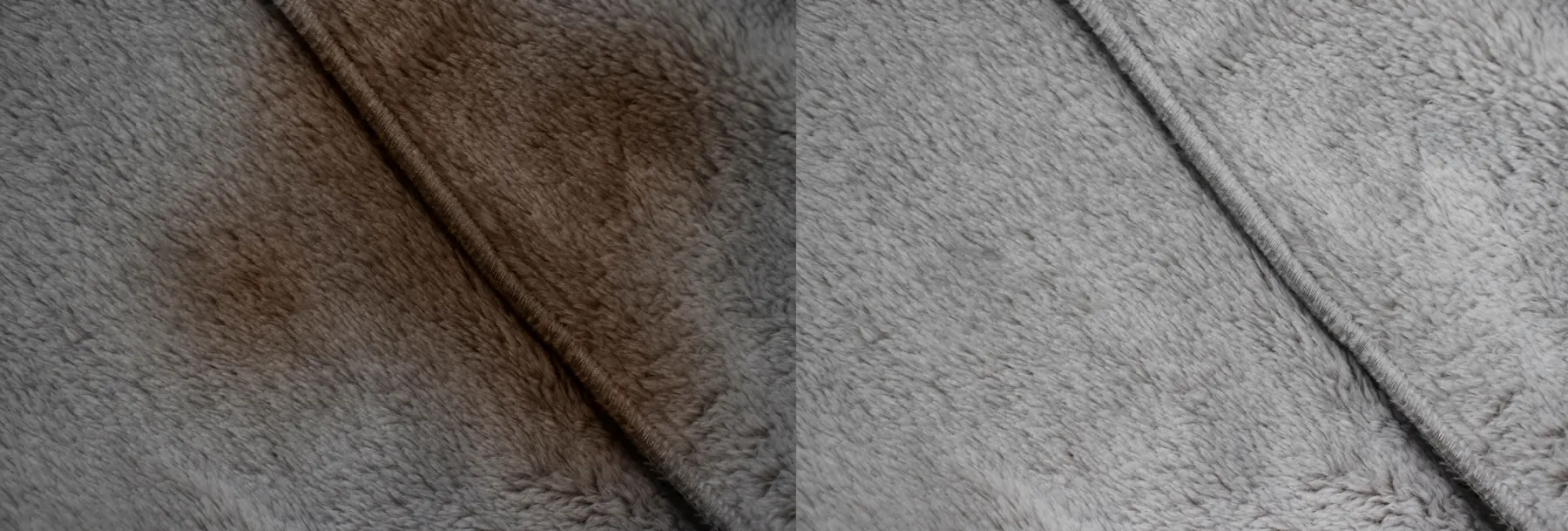
Blot, never rub, and work from the edge of the stain inward with a white cloth. Then match the method to the stain: lukewarm water and a little dish detergent for most food and drink, cool water only for blood and other protein, scraping and gentle heat for wax, ice for gum. Test every product in a hidden spot first, and rinse it out afterwards.
Jump to a stain: coffee and tea, red wine, blood, candle wax and crayon, chewing gum, vomit, nail polish, ink, slime, pet urine and road salt.
What are the rules for every stain?
The same handful of rules come up in every reputable guide, from the Carpet and Rug Institute to Shaw's carpet care page to wool carpet makers. They matter more than the product you pick.
- Act now. A spill that is still wet is mostly sitting in the pile. Every hour it has, it goes deeper and bonds harder.
- Lift what you can first. Scoop solids with a spoon or a blunt knife. Blot liquids with a plain white cloth or white paper towel, pressing down, then moving to a dry part of the cloth. White matters, because a coloured cloth can transfer its own dye.
- Blot, do not rub. Rubbing pushes the spill into the backing and frays the tips of the pile, which leaves a fuzzy patch even when the colour is gone. The CRI says plainly not to scrub or use a brush.
- Work from the outside in. Starting at the centre spreads the stain into clean carpet.
- Know the fibre. Check the label on the back of a rug, or the spec sheet from when the carpet was fitted. Most broadloom is nylon, polyester or polypropylene. Wool, silk, viscose (sold as "art silk" or "bamboo silk") and other natural fibres react differently, and most of the advice below does not apply to them without changes.
- Test in a hidden spot. Put a little of the solution on a cloth, press it inside a cupboard or under a sofa, and look at the cloth and the carpet. If colour moves or the pile changes, stop.
- Put the product on the cloth, not the carpet. Pouring anything onto carpet floods the backing. Over-wetting is how a small spot becomes a large ring.
- Rinse. Finish with clean water on a cloth, then blot until the cloth comes up dry. Detergent left behind is the most common reason a cleaned spot turns grey within a month.
The CRI's own home solution, repeated across its Spot Solver entries, is a quarter teaspoon of clear liquid dish detergent in a cup of lukewarm water, and it warns never to make it stronger. It also says not to use laundry detergent, which can contain dyes, or dishwasher detergent, which can contain bleach that destroys dyes and some fibres.
Which method suits which stain?
The chemistry of the spill decides the method. Tannins and dyes, proteins, waxes and resins each need something different, and the wrong one can fix a stain in place.
| Stain | What it is | First step | Avoid |
|---|---|---|---|
| Coffee, tea | Tannin, often with milk | Blot, then lukewarm detergent solution | Hot water if there was milk in it |
| Red wine | Tannin and dye | Blot, cool water, then detergent solution | Rubbing, salt, bleach |
| Blood | Protein | Cool water only | Any heat, including steam machines |
| Vomit | Protein and acid | Scrape, blot, detergent solution | Heat, perfume sprays |
| Candle wax, crayon | Wax, sometimes with dye | Harden, scrape, vacuum | High heat, pouring solvent |
| Chewing gum | Gum base | Harden with ice, chip off | Pulling it while soft |
| Nail polish | Lacquer | Non-acetone remover on a cloth | Pouring remover on the spot |
| Ink | Dye in a carrier | Rubbing alcohol on a cloth | Pouring alcohol on the spot |
| Slime | Glue, borax and colour | Lift the mass while intact | Soaking it |
| Pet urine | Urea, salts, odour | Blot hard, enzyme cleaner | Ammonia, heat |
How do you treat each common stain?
Each section below follows the CRI's Spot Solver order unless it says otherwise. Where a stain has its own guide, the short version is here and the detail is there.
Coffee and tea
Blot up the liquid, then work in the CRI detergent solution from a cloth and blot again. The CRI's coffee entry follows that with a white vinegar solution (one part vinegar to two parts water), then a rinse with lukewarm water. Coffee and tea are tannin stains, so they behave much like red wine. If there was milk in the cup, treat it with the same caution as any protein and keep the water cool.
Red wine
Blot, rinse with cool water, blot again, then use the detergent solution. Speed matters more here than with almost anything else, because the colour in red wine starts to bond with the fibre as it sits. The full method for fresh and dried spills, and what not to put on it, is in how to get red wine out of carpet.
Blood
Cool water only. Blood is protein, and warm water, a hot rinse or a steam machine cooks it onto the fibre. The CRI's tips page says to rinse the spot quickly with cool water before any cleaner. Fresh, dried and soaked-through stains are covered in how to get blood out of carpet.
Candle wax and crayon
Let it go hard, break it up and vacuum the flakes, then lift the rest into paper with low heat. The heat step is where carpet gets damaged, and coloured wax often leaves a dye mark behind. Both are covered in how to get candle wax out of carpet.
Chewing gum
Make it brittle before you touch it. Hold ice cubes in a plastic bag on the gum until it is hard, then chip and pick it out of the pile with a blunt knife, working with the direction of the pile. That is the first step in the Bremworth stain guide, which is based on advice from Wools of New Zealand. For the sticky film left behind, the CRI's gum entry lists a non-flammable dry-cleaning type spot remover, applied to a cloth and dabbed on. Never pour a solvent onto carpet or let it reach the backing: the CRI warns it can damage the latex that holds the backing layers together.
Vomit
Scrape up the solids with a spoon, then blot. Use the detergent solution, then the vinegar solution, then rinse, which is the order on the CRI's vomit entry. Keep the water cool to lukewarm, because vomit carries protein. For the smell that can linger in the backing, an enzyme cleaner made for organic stains is the usual next step. Spray fresheners only cover it.
Nail polish
The CRI's tips page recommends a non-acetone nail polish remover, put on a white cloth and worked in from the edges, then blotted with lukewarm water. Test it first, because some removers carry their own dyes or oils. Work in small dabs and change to a clean part of the cloth often, or you spread the colour. A dark polish on pale carpet that has already dried rarely comes out completely at home.
Ink
For ballpoint, the CRI suggests 70 percent isopropyl rubbing alcohol on a cloth or paper towel, never poured on the spot. Blot, do not rub, and expect the cloth to take the ink a little at a time. Test first: alcohol can move some carpet dyes as well as the ink. Felt tip and permanent marker are harder, and on wool or a patterned rug they are a call, not a project.
Slime
The CRI has no entry for slime, so this is the general method applied to what it is made of. Most homemade slime is PVA glue set with borax, plus colour. Pull off as much as you can while it still holds together, because it comes away in one piece far more easily before it dries into the pile. Then use the detergent solution, and follow with the CRI's vinegar solution, which is there to neutralise alkaline residue such as borax. Rinse and blot dry. Coloured or glitter slime can leave a dye mark that needs the same treatment as a dye stain.
Pet urine and road salt
Both have their own guides, because the problem is less the mark than what is left underneath. Urine leaves salts and odour in the backing and underlay; see how to get pet urine smell out of carpet. Winter salt leaves a white crust that keeps coming back; see how to get salt stains out of carpet.
What should you never put on a carpet stain?
- Chlorine bleach, or any cleaner that contains it. It removes colour from carpet for good, and on wool it attacks the fibre too.
- Hot water or steam on protein. Blood, vomit, milk, egg and urine set with heat.
- Laundry or dishwasher detergent. The CRI warns against both.
- More detergent than the recipe. Stronger does not clean better, it leaves more residue.
- Several products, one after another. Each one changes the chemistry, and some combinations are dangerous. Health Canada warns never to mix bleach with ammonia or acids such as vinegar.
- A stiff brush. It frays the pile into a permanent fuzzy patch.
- A stain-resist spray before the stain is out. The CRI notes that applying one too early can make the stain permanent.
On wool, add strong alkaline cleaners and oxygen bleach powders to that list. Wool carpet makers such as Cormar give their own stain-by-stain treatments, and they differ from the synthetic ones. The wool rug guide explains why.
When should you stop and call?
Stop if the stain has been rubbed in, has already had several products on it, or is on wool, silk or viscose. Each extra product changes the chemistry, and a stain that has been set by heat or the wrong cleaner is much harder to shift than the original spill. Stop as well if the stain is old, larger than a hand, on a sofa or a mattress, or if colour starts coming off on your test cloth.
At that point the useful thing is to leave it alone and call 647-697-7435 or request a free quote. AllCleaner looks at the fibre and the stain, tells you what is likely to come out and what is not, and confirms the price before work starts. Some marks, such as bleach spots or old dye stains, are a colour problem rather than a cleaning one, and why carpet stains come back explains the difference. For the work itself, see carpet cleaning, area rug cleaning and upholstery cleaning.

Short answers.
- Does club soda actually work on carpet stains?
- Club soda is almost entirely water, so its real effect is dilution, and plain cool water does the same job without anything left behind. The bubbles do not lift a stain out of the fibre. The Carpet and Rug Institute notes that plain water often works better than an untested carpet cleaner.
- Why does a stain go darker after I clean it?
- Usually because detergent was left in the pile. The sticky residue grabs new soil, so the patch darkens over days or weeks. It can also be the spill rising back up from the backing as the carpet dries. Rinsing with clean water and blotting dry after any cleaner prevents most of it.
- Is hydrogen peroxide safe on carpet?
- Not as a first step. Peroxide is a bleach, and it can take colour out of the carpet as well as out of the stain. On light synthetic carpet it is sometimes used on a dye stain after a hidden-spot test. On wool, silk, viscose or any dark or patterned carpet, do not use it.
Filed under Stains and odours. More in the blog.
Keep reading
More on stains and odours, and close to it.
How to get blood out of carpet without setting it
Blood is the stain where the usual instinct, warm water and a good scrub, does the most harm. Why it behaves differently, how to treat it fresh or dried, and what to do when it has gone through to the pad.

How to get candle wax out of carpet
Wax is the one stain you should let sit. Most of it comes out as dry flakes, the rest needs careful heat, and a coloured candle leaves a dye problem that is separate from the wax.

How to get red wine out of carpet, fresh or dried
Red wine is tannin plus a strong natural dye, which is why it can look worse after you clean it than before. The first minutes, the dried stain, and the three things people reach for that make it permanent.





