
How to get candle wax out of carpet
Wax is the one stain you should let sit. Most of it comes out as dry flakes, the rest needs careful heat, and a coloured candle leaves a dye problem that is separate from the wax.

Let the wax harden, or hold ice in a bag on it, then lift what you can with a blunt knife and vacuum the flakes. Lay plain paper towel or brown paper over the rest and press with an iron on low, no steam, moving to clean paper as it soaks up wax. Coloured candles can leave a dye mark that needs separate treatment.
The general rules for every stain are in the carpet stain guide. This page covers wax and crayon in detail, because the method is physical first and chemical second.
How do you get the bulk of the wax out?
Wait. Wiping wet wax spreads it across more pile and pushes it down to the backing. Hard wax, by contrast, breaks off the fibre in pieces.
- Let it set completely. On a cold winter floor that takes minutes. Speed it up with ice cubes in a sealed plastic bag held on the wax. Keep the bag sealed, because melt water on the carpet makes the next steps harder.
- Break it up. Press the hardened wax with the back of a spoon until it cracks. On thick drips, a blunt butter knife works.
- Scrape gently, with the pile. Lift the pieces out, working in the direction the pile lies. Do not dig at the backing.
- Vacuum the flakes. The Carpet and Rug Institute's wax entry says to break up solids and vacuum before anything else. Go slowly over the area, in several directions.
- Look closely. On short pile, most of the wax is often gone at this point. What remains is a thin film around the fibres, and that is what heat is for.
Crayon behaves the same way, and the same first steps apply. The CRI's crayon entry moves straight to a solvent for what is left, which is covered below.
How do you use heat without melting the carpet?
The CRI's home tips describe the method: cover the spot with brown paper and apply low heat from an iron, and the paper absorbs the wax as it melts. The difficulty is that the heat which melts wax can also melt or scorch carpet fibre. Legend Brands, which makes professional cleaning equipment, warns that olefin has a low melting temperature. Olefin is another name for polypropylene, a common fibre in broadloom and in many shag and indoor-outdoor rugs.
Done carefully, it looks like this:
- Find out the fibre if you can. Rug labels and fitting paperwork usually say. If you cannot find out, treat it as heat-sensitive.
- Use plain paper. Brown paper or plain white paper towel, nothing printed, because ink can transfer onto the carpet in the heat.
- Set the iron to its lowest setting, steam off. Let it warm up and test it on the paper over a hidden corner of the carpet first.
- Press briefly and keep moving. A few seconds at a time, then lift and look. Never rest the iron in one place.
- Move to clean paper each time. As the paper takes up wax, shift it so a fresh area sits over the spot. Repeat until no more wax comes up.
- Stop at any warning sign. A plastic smell, fibres that look glossy or feel stiff, or pile that has flattened and will not lift are all signs of heat damage. Those changes are permanent.
On wool, fibre that does not melt but can scorch, a wool carpet maker such as Cormar does list brown paper and a low iron for wax, followed by a solvent on the stain only. On silk or viscose, do not use heat at all.
What do you do about the coloured mark left behind?
A red, green or purple candle is wax plus dye. Removing the wax does not remove the dye, and once the wax melts, some of that dye can move into the fibre. The same Legend Brands article notes that cleaners can lift the wax and still be left with the dye.
For the waxy residue and some of the colour, the CRI's first choice is a non-flammable spot remover or dry-cleaning type solvent. Apply it to a white cloth, not the carpet, and dab from the edges in. The CRI warns never to pour a solvent onto carpet or let it reach the backing, because it can damage the latex that holds the backing layers together. Follow with the CRI's mild detergent solution, a quarter teaspoon of clear dish detergent in a cup of lukewarm water, then rinse and blot dry. Ventilate the room while you work.
If a coloured mark is still there after that, stop. A dye stain is now a colour problem, not a wax problem, and more heat or stronger solvents tend to fix it in place. Do not reach for bleach or peroxide; they take the carpet's colour along with the candle's.
What not to do
- Do not pull at soft wax or scrub it while it is warm.
- Do not use a steam iron, a high setting, or leave the iron still.
- Do not use printed paper bags, newspaper or coloured towels.
- Do not pour solvent, nail polish remover or anything flammable on the carpet.
- Do not use heat on silk, viscose or any rug you cannot identify.
When should you stop and call?
On wool, shag, or any synthetic that might melt, or where coloured wax has left a dye stain, the heat step is where carpet gets ruined. That is the point to call, before the iron comes out rather than after.
Call 647-697-7435 or request a free quote. AllCleaner will look at the rug or carpet, say whether the wax and the colour are likely to come out, and confirm the price before work starts. See area rug cleaning for rugs and carpet cleaning for wall-to-wall. If the rug is wool, read how to clean a wool rug before anything else, and if a mark keeps reappearing after it looked clean, why carpet stains come back explains why.
Short answers.
- Can I use a hair dryer instead of an iron?
- It works on small amounts, but it is harder to control. Warm air melts the wax and can push it deeper or spread it unless absorbent paper is already pressed on the spot. Use the low setting, hold paper towel on the wax as it softens, and stop if the pile starts to feel hot.
- Does this work on a shag or wool rug?
- The scraping and freezing steps do. On a long shag pile, work strand by strand and expect wax deep in the base. Heat is riskier: many shag rugs are synthetic and can melt, and wool can scorch. Test the heat on a hidden strand first, or leave this step to a professional.
- Why is there a greasy patch where the wax was?
- Candle wax and scented oils leave a film in the pile even after the solid wax is gone. That film darkens as it picks up dirt. A dry-cleaning type spot remover on a cloth, followed by a mild detergent solution and a rinse, usually lifts it. Test first and never pour solvent on carpet.
Filed under Stains and odours. More in the blog.
Keep reading
More on stains and odours, and close to it.
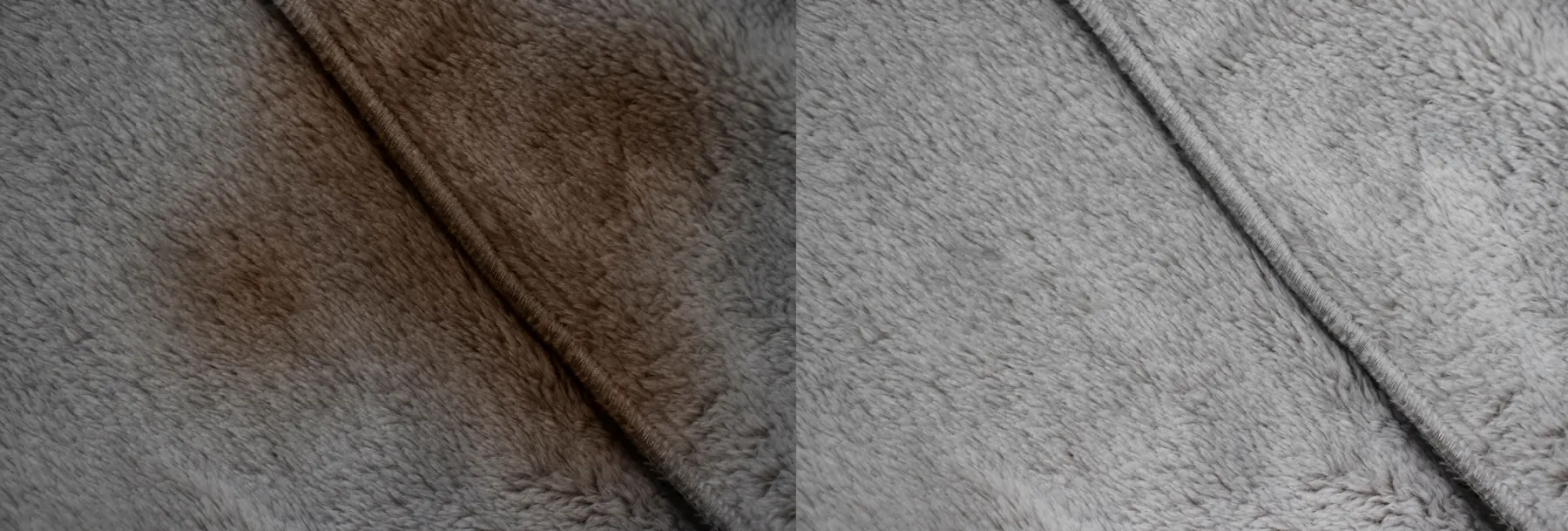
Carpet stain guide: what to use on which stain
A carpet stain that ends up permanent is rarely the fault of the spill. It is usually set by scrubbing, hot water and the third product from under the sink. The rules that apply to everything, a table by stain, and the point where you should put the cloth down.

How to get blood out of carpet without setting it
Blood is the stain where the usual instinct, warm water and a good scrub, does the most harm. Why it behaves differently, how to treat it fresh or dried, and what to do when it has gone through to the pad.
How to get red wine out of carpet, fresh or dried
Red wine is tannin plus a strong natural dye, which is why it can look worse after you clean it than before. The first minutes, the dried stain, and the three things people reach for that make it permanent.





