
Why does carpet smell after it has been cleaned?
The carpet looks clean and the room smells worse than it did yesterday. The kind of smell tells you most of what you need to know, and the fix is nearly always about water, not more product.
A smell after cleaning usually means the carpet is still wet underneath. Moisture wakes up old residue in the backing and underlay, and wool can smell like a wet animal until it dries. A sharp chemical smell points to detergent left in the pile. If the smell fades as the carpet dries, it was moisture. If it does not, something deeper remains.
What is the smell telling you?
Each smell has a short list of causes, and most of them come back to how much water went in and how much came out.
| Smell | Most likely cause | What to do |
|---|---|---|
| Musty, damp, like a basement | Carpet or underlay wet for too long, or an older damp problem below | Dry it hard and fast; if it lasts, check the underlay and subfloor |
| Wet dog or farmyard | Wool fibre, or old soil and body oils in the pile, released by water | Usually fades as it dries; if not, the pile still holds soil |
| Sharp, soapy, chemical | Too much cleaning product, not rinsed out | A rinse with plain water and extraction, not more product |
| Perfume | A scented product on purpose | Fades; ask for unscented next time |
| Urine, often worse than before | Old urine salts in the backing, reactivated by water | Targeted urine treatment and extraction at the spot |
| Sour, like a wet towel | Bacteria in carpet that stayed damp | Dry quickly; repeat drying if needed |
Musty is the one to take seriously. It means water has been sitting somewhere long enough to start breaking things down. In a basement, where carpet lies over cool concrete and the air is damper, a carpet can take far longer to dry than the same carpet upstairs.
Wet dog is mostly harmless. Wool is an animal fibre and smells like one when wet, and any carpet carrying body oils and old soil gives off a stale smell as water stirs it up. It should go as the carpet dries.
Chemical means residue. The Carpet and Rug Institute notes that rinsing with plain water after a cleaner neutralises alkaline residue and prevents fast re-soiling. A carpet that smells of product was given more than it needed or was not rinsed. The smell often comes with a slightly stiff or sticky feel to the pile, and the carpet will grey faster than it should.
Urine that appears only after cleaning was there all along. Dry urine salts are quiet until water reaches them. The full explanation, and why the fix is at the spot rather than across the room, is in how to get pet urine smell out of carpet.
How do you dry it fast enough to stop it?
Move air across the carpet and take moisture out of the room. The goal is to get the backing dry, not just the tips of the pile.
- Feel the base of the pile. Push your fingers down to the backing in a few places, including the middle of the room and the edges. Damp at the base means you are still drying, whatever the surface looks like.
- Get air moving. Point fans across the floor, not up at the ceiling. Health Canada's guide to moisture and mould recommends fans, open windows when the weather allows, and a dehumidifier to speed drying.
- Take the water out of the air. In summer, run the air conditioning. In a basement, run a dehumidifier and empty it often. On a humid day, open windows add moisture rather than remove it.
- Keep heat moderate. A warm room dries faster, but blasting heat onto a damp wool carpet is not a good idea, and a closed hot room just gets humid.
- Keep things off it. Leave rugs, furniture and boxes off until it is dry. Furniture legs set straight back on damp carpet can leave rust or dye marks; put foil or plastic blocks under them if they must go back early.
- Stay off it in shoes. Damp pile picks up soil quickly.
How long that takes depends on the carpet, the room and the weather; the carpet drying guide covers what speeds it up and slows it down. The way the carpet was cleaned matters too: the steam versus dry cleaning comparison explains why a well-run extraction should leave the carpet damp, not wet.
When does a lasting smell mean the underlay is the problem?
When the carpet is fully dry and the smell is still there, or when it returns every humid day. At that point the source is not in the pile.
A few patterns point below the carpet:
- The smell is strongest in one area, often near a wall, a door to the garden, a bathroom, a pet's favourite corner or under where a plant stood.
- The room had water in it before. A leak, a flooded basement or an overflowing washer that was dried only from the top can leave the underlay holding water or its residue for a long time.
- The carpet is in a basement on concrete. Moisture can rise from the slab and the underlay sits right on it.
- Pressing hard on the carpet brings up a stronger smell, or the backing feels cool and damp.
Health Canada advises that if a strong musty odour is present with no clear sign of water damage, it is worth consulting a professional about hidden mould in walls and floor cavities. If the underlay itself is wet or mouldy, cleaning the carpet cannot fix it, and the lasting repair is to lift the carpet and replace that section of pad. That becomes a water damage question rather than a cleaning one. A smell that keeps returning in one spot after cleaning is related to the problem in why carpet stains come back: what was in the backing rises again as the carpet dries.
When should you call?
If the carpet is still damp a day later, or the smell comes back on humid days, it needs extraction that takes water out, not more water put in. A second round with a rental machine usually makes it worse, because it adds more water than it can recover.
Call 647-697-7435 or request a free quote. AllCleaner's carpet cleaning finishes with dry passes to pull out as much moisture as possible, and air movers can be left running where a room needs them. If the smell points to the underlay or an old leak, you will be told that before any cleaning is booked, and the price is confirmed before work starts.

Short answers.
- Is it normal for carpet to smell the day after cleaning?
- A faint damp smell while the carpet is still drying is normal, and wool can smell like a wet animal for a while. It should fade steadily as the carpet dries. A smell that is stronger the next day, or a carpet that still feels damp at the base of the pile, means too much water was left in.
- Can a smell after cleaning turn into mould?
- It can if the carpet, backing or underlay stays wet. Health Canada's advice is to dry damp materials quickly and fix the moisture source, and it treats a strong musty smell with no visible cause as a reason to have hidden mould checked. A carpet that dries promptly after cleaning is not a mould risk.
- Should I spray air freshener on damp carpet?
- No. Fragrance does nothing to the cause, and on damp carpet it adds more residue to a pile that may already hold detergent. Put the effort into airflow and drying instead. If the smell is still there once the carpet is completely dry, it is telling you something is left in the backing or underlay.
Filed under Stains and odours. More in the blog.
Keep reading
More on stains and odours, and close to it.
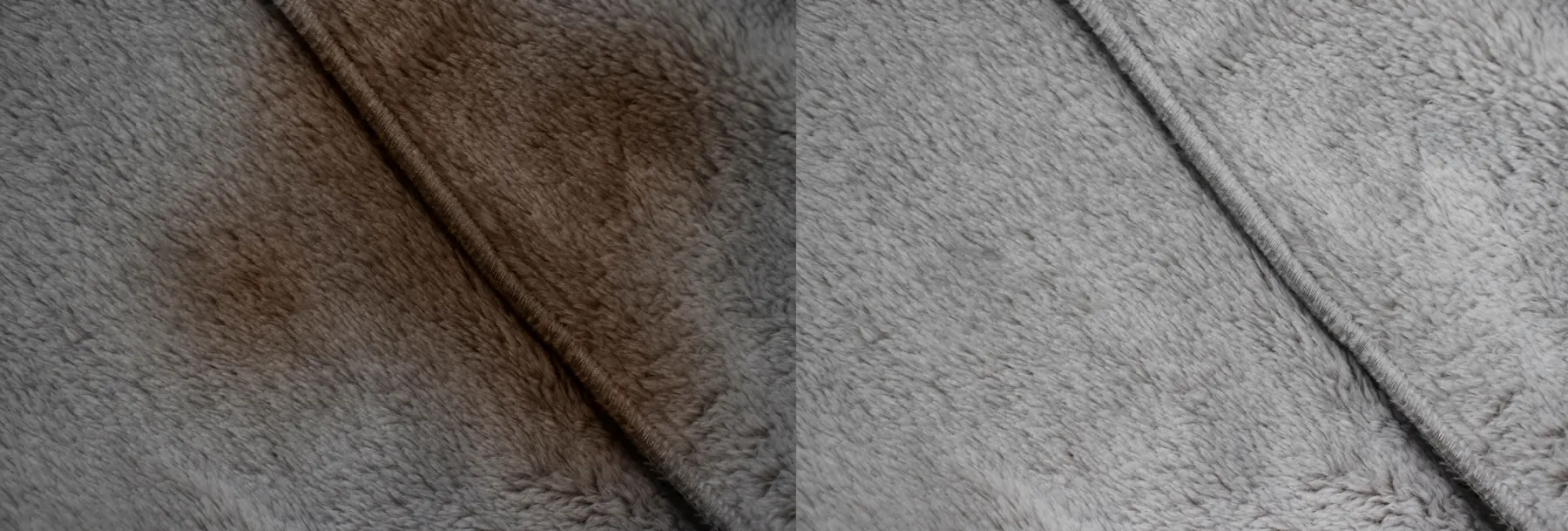
Carpet stain guide: what to use on which stain
A carpet stain that ends up permanent is rarely the fault of the spill. It is usually set by scrubbing, hot water and the third product from under the sink. The rules that apply to everything, a table by stain, and the point where you should put the cloth down.

How to get blood out of carpet without setting it
Blood is the stain where the usual instinct, warm water and a good scrub, does the most harm. Why it behaves differently, how to treat it fresh or dried, and what to do when it has gone through to the pad.

How to get candle wax out of carpet
Wax is the one stain you should let sit. Most of it comes out as dry flakes, the rest needs careful heat, and a coloured candle leaves a dye problem that is separate from the wax.




